



Softboards and Foam Surfboards
Discover MDNS Surf softboards, our selection of foam surfboards suited to different skill levels. Whether you're looking to learn to surf, progress, or find a more dynamic ride, compare sizes, volumes, and constructions to choose a board that suits your build and the wave conditions.
See more
Why choose a foam surfboard?
A foam surfboard, also known as a softboard, stands out for its soft outer covering. Depending on its construction, shape, and dimensions, it can offer good flotation, make catching waves easier, and help you progress at your own pace.
Softboards aren't just for beginners, though. Some compact, maneuverable models are also popular with experienced surfers looking for different sensations, especially in small waves or during more laid-back sessions.
The foam deck can reduce the risk of impact compared with a hard surface, but a softboard is still a surfboard, so water safety rules must be followed.
Which softboard should you choose for your surfing level?
Softboards for beginners
When learning to surf, it's generally best to choose a board that's long, wide, and buoyant enough to make paddling, catching waves, and finding your balance easier. A board that's too short or lacks volume can make your first sessions more challenging.
Discover MDNS softboards for beginners, designed to support you through the first steps of learning to surf.
Softboards to help you progress
Once you've mastered the basics, a more compact board or one with a different outline can help you work on turns and your first maneuvers. However, your choice should still match how often you surf, your build, and your ability to catch waves independently.
The intermediate softboards collection features models for this stage of progression.
Performance-Oriented Softboards
A performance-oriented softboard generally favors a more dynamic approach to surfing, with shape and construction features suited to surfers who are already comfortable in the waves. It won’t necessarily be as easy to paddle or as forgiving as a large beginner board.
For a more committed approach, check out MDNS performance softboards.
How do you choose the size and volume of a softboard?
Surfboard length is generally measured in feet and inches. It’s a useful starting point, but not enough to determine whether a softboard suits a surfer. Its width, thickness, volume in liters, and how that volume is distributed also affect its buoyancy, performance, and maneuverability.
For surfers of similar ability and build, a board with more volume can make paddling and floating easier, while a more compact model may offer greater maneuverability at the cost of requiring more skill.
Choosing the right softboard means weighing several factors: surfer weight, experience, fitness, session frequency, and wave type. There’s no ideal length or volume that works for everyone.
What are the differences between MDNS softboard constructions?
A board’s construction affects its stiffness, weight, durability, and feel in the water. Several technologies are used in the world of softboards, with differences that need to be assessed model by model.
EPS Classic Softboards
LEPS, or expanded polystyrene, is a material used to make the core of many surfboards. MDNS EPS Classic softboards belong to a family of constructions whose exact characteristics depend on the model and the materials combined with the core.
Softboard EPS Stringer
A stringer is a reinforcing element built into a board’s structure. Depending on its material, position and design, it can affect the board’s stiffness and performance. Discover MDNS EPS Stringer softboards to compare the available models.
HD Core softboards
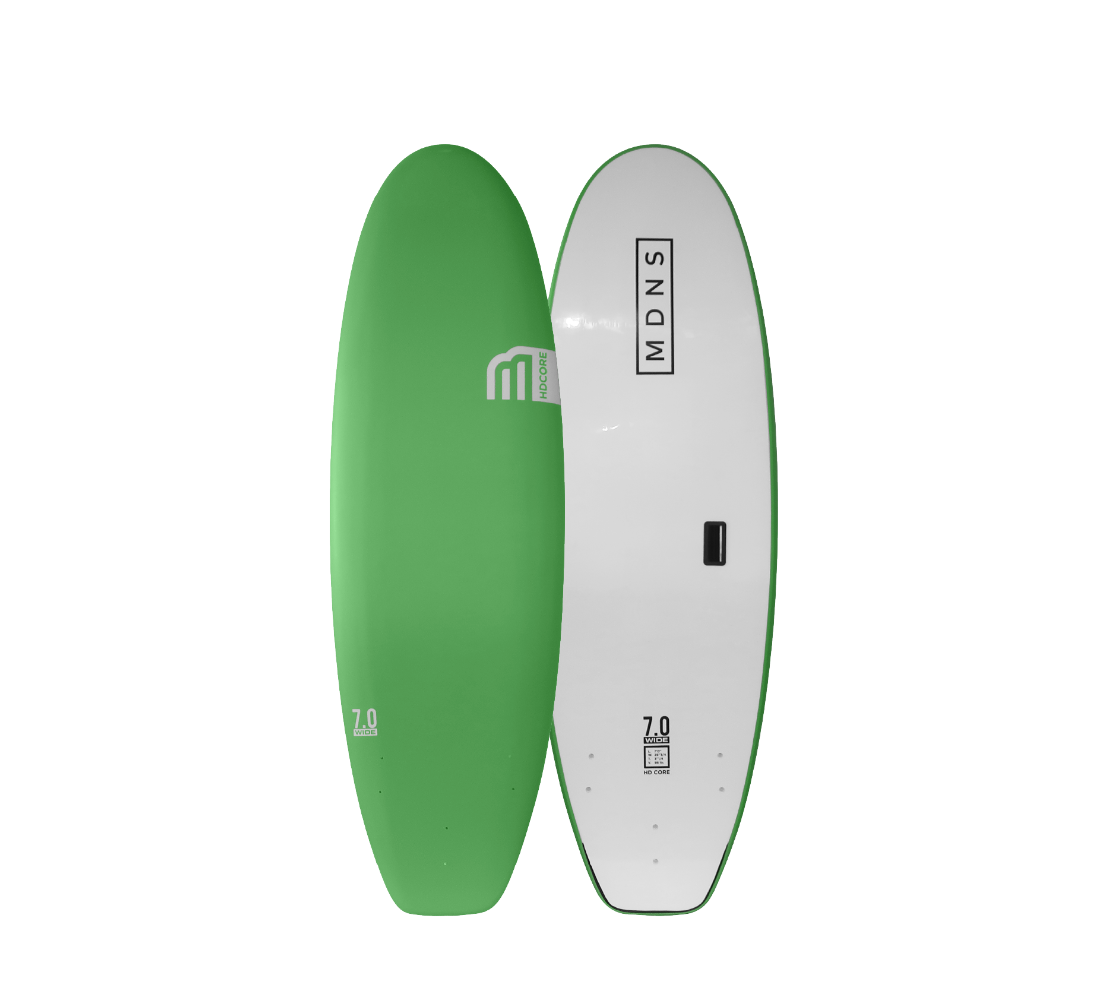
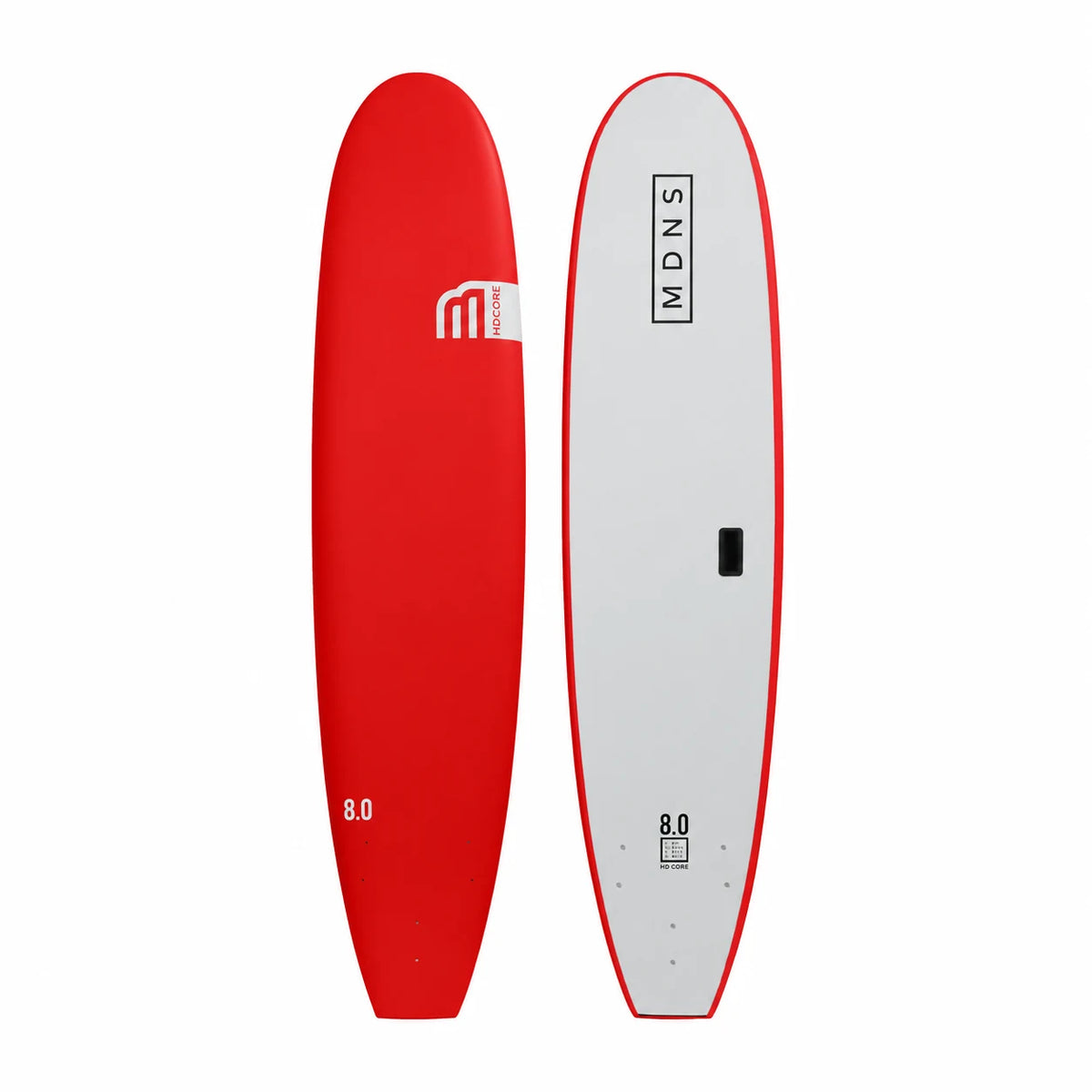
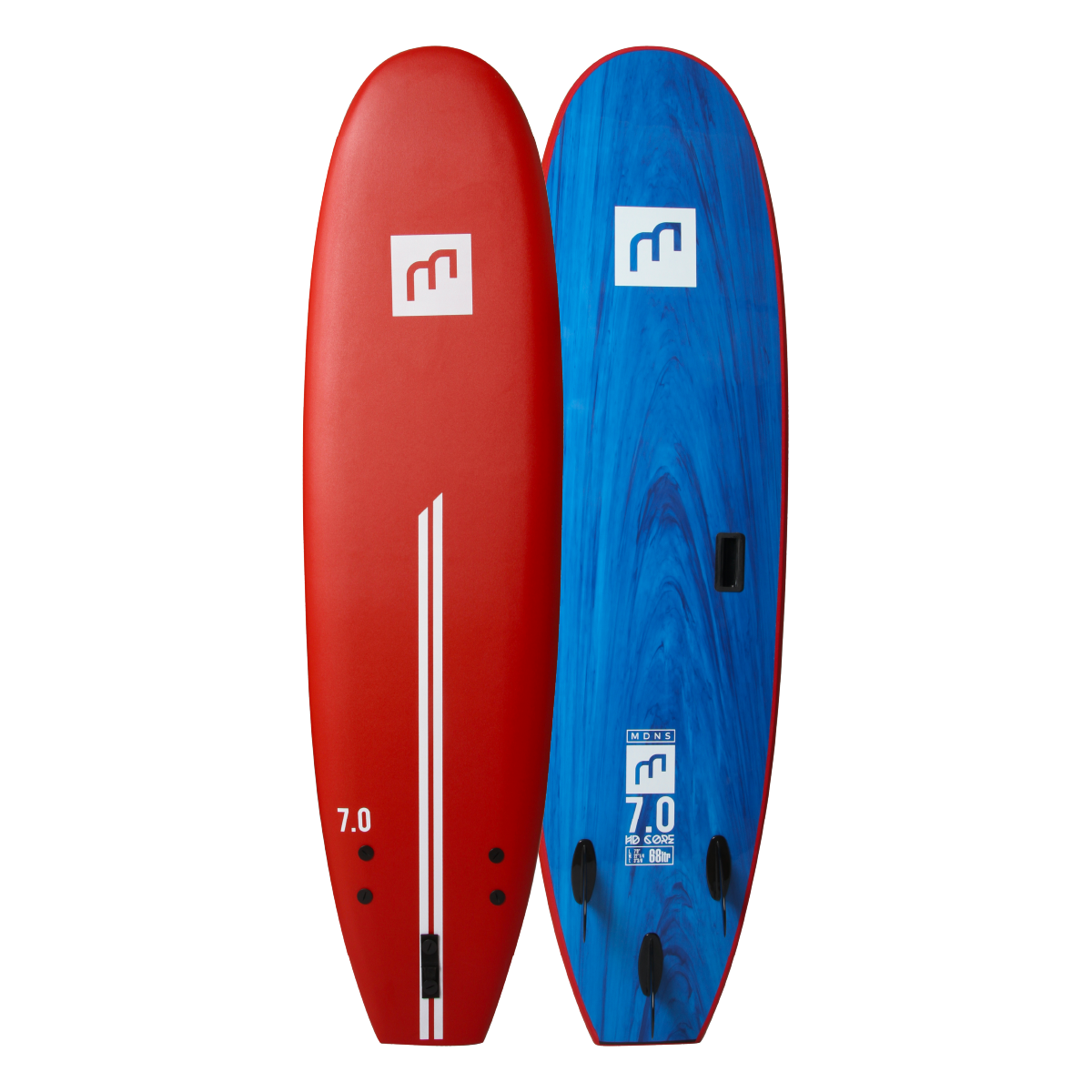
The HD Core MDNS construction uses a high-density EPS core, combined with an IXL PE deck, an HDPE bottom and laminated wooden stringers, the number of which may vary by model. Discover the HD Core softboards and compare their dimensions, volumes and technical features.
The name of a construction alone isn’t enough to determine a softboard’s performance level. The shape, dimensions and materials used should all be considered together.
Which foam surfboard should you choose for different waves?
In small, weak waves, a board with enough surface area and volume can help you catch waves earlier and maintain speed. Conversely, in hollower or faster waves, control, rail shape and maneuverability become especially important.
A long, high-volume softboard can be a great way to discover surfing in suitable conditions, while a shorter model may suit an experienced surfer looking for a different approach to the wave.
Your choice should always take the surfer’s actual ability and the spot’s conditions into account. A foam surfboard doesn’t automatically make challenging waves suitable for beginners.
How do you care for a foam surfboard?
After a session, rinse your softboard with fresh water if needed, then leave it to dry in the shade before putting it away. Avoid leaving it in direct sunlight for long periods or in a very hot vehicle, as high temperatures can damage some materials and construction.
Regularly check the condition of the deck, fins and any damaged areas. If you suspect a crack or water ingress, consult the model-specific care and repair recommendations before heading back out.
Filters
42 products









FAQ - MDNS Softboards
How to choose your softboard?
When choosing a softboard, consider your surfing level, weight, how often you surf, and the waves you ride. The board’s length, width, volume, and shape affect its buoyancy, stability, and maneuverability. Beginners will generally prefer a longer, higher-volume board for easier paddling and wave catching, while experienced surfers can opt for a more compact, responsive model.
What size softboard should I choose?
The right size depends on the surfer’s build and skill level, as well as the board’s volume. For beginners, a softboard that’s long, wide and buoyant enough generally makes it easier to balance and catch waves. Experienced surfers can choose a shorter board for greater maneuverability. There’s no one-size-fits-all: two boards of the same length can have very different volumes and ride very differently.
Which softboard should you choose to start surfing?
To learn to surf, choose a stable foam surfboard with plenty of volume and suited to your weight. More surface area generally makes it easier to paddle, catch waves and practice popping up. Avoid choosing a board that’s too short just for its maneuverability: it can make learning harder. Surf conditions should also be suitable for beginners.
Are softboards only for beginners?
No. Although foam surfboards are widely used for learning, there are also softboards designed for intermediate and advanced surfers. Some more compact models offer a playful ride or a more dynamic feel. Each board’s performance depends on its shape, volume, fins and construction.
What are the different MDNS softboard constructions?
MDNS offers several construction types, including EPS Classic, EPS Stringer, and HD Core. L EPS is a material used for the core of some boards. A stringer is a structural reinforcement that can affect their stiffness. The features of the HD Core range should be compared using the technical specifications for the models in question. The name of a construction alone is not enough to determine performance: the shape, dimensions, and materials also play a role.
What's the difference between a softboard and a hard surfboard?
A softboard generally has an outer foam covering, whereas a hardboard has a harder outer surface. Depending on their dimensions and construction, softboards can offer a more forgiving way to learn. Hardboards also come in very accessible shapes. The choice therefore depends mainly on your ability level, volume, shape and intended use. A foam board does not eliminate the risk of injury.
What softboard volume should you choose based on your weight?
Volume, expressed in liters, affects a board’s buoyancy. For surfers of a similar build, more volume generally makes a board float more easily and can help with paddling. However, weight alone isn’t enough to determine the ideal volume: skill level, fitness, board shape, and wave conditions also matter. It’s better to compare the dimensions and volumes of different models than to rely on a universal ratio.
How do you care for and store a foam surfboard?
After use, rinse off sand and salt with fresh water if needed, then leave the board to dry in the shade. Avoid prolonged exposure to the sun, very hot vehicles, and impacts during transport. Regularly check the condition of the surface, fins, and assembly areas. If you notice any damage or suspect water ingress, consult the repair recommendations suited to the board’s construction.