


Beginner Surfboards | MDNS Softboards
Looking for a beginner surfboard to catch your first waves? Check out the MDNS Surf softboards, selected to support your first sessions and help you progress in the right conditions. With their soft deck and dimensions suited to learning, these boards let you work on your paddling, take-off and first moves on the wave.
Whether you want to start surfing as an adult or a child, your first board depends on your build, balance and the conditions you surf in. Length, width, volume and construction are all criteria to consider when finding a beginner surfboard that suits your progress.
See more
Which surfboard should you choose as a beginner?
When learning to surf, it's generally best to choose a board with plenty of stability and buoyancy. The right board makes paddling, catching waves and your first take-offs easier. Conversely, a board that's too short or doesn't have enough volume can make learning more challenging.
A beginner surfboard should be chosen above all to suit your build, experience in the water and the types of waves you want to surf. Volume matters, but it should never be considered separately from the board's length, width and shape.
Key criteria for choosing your first board
- Length: this influences stability, glide and ease of paddling.
- Width: extra width can provide more stability, which is especially useful when learning.
- Volume: measured in liters, it contributes to the board's buoyancy and should be suited to the surfer's weight.
- Shape: a generous outline and well-distributed volume can make catching your first waves easier.
- Construction: it determines the board's behavior, stiffness and deck characteristics.
Why start with a softboard?
A beginner softboard is a surfboard with a soft covering. This type of board is often used for learning because it's available in sizes that offer good buoyancy and a comfortable surface for practicing the fundamental moves of surfing.
Foam boards are ideal for practicing your positioning on the board, paddling, catching waves and going from lying down to standing up.
However, a soft deck doesn't eliminate the risk of injury. It's still essential to keep a safe distance, choose suitable waves and follow surfing guidelines.
What size surfboard is best for a beginner?
There isn't one size that suits every beginner. A lightweight person, a larger adult and a child won't necessarily need the same board volume or length.
For your first sessions, a relatively long, wide, high-volume board is often more accessible than a low-volume shortboard. The right choice should still take your weight, height, swimming ability and surf conditions into account.
7'0 beginner surfboard
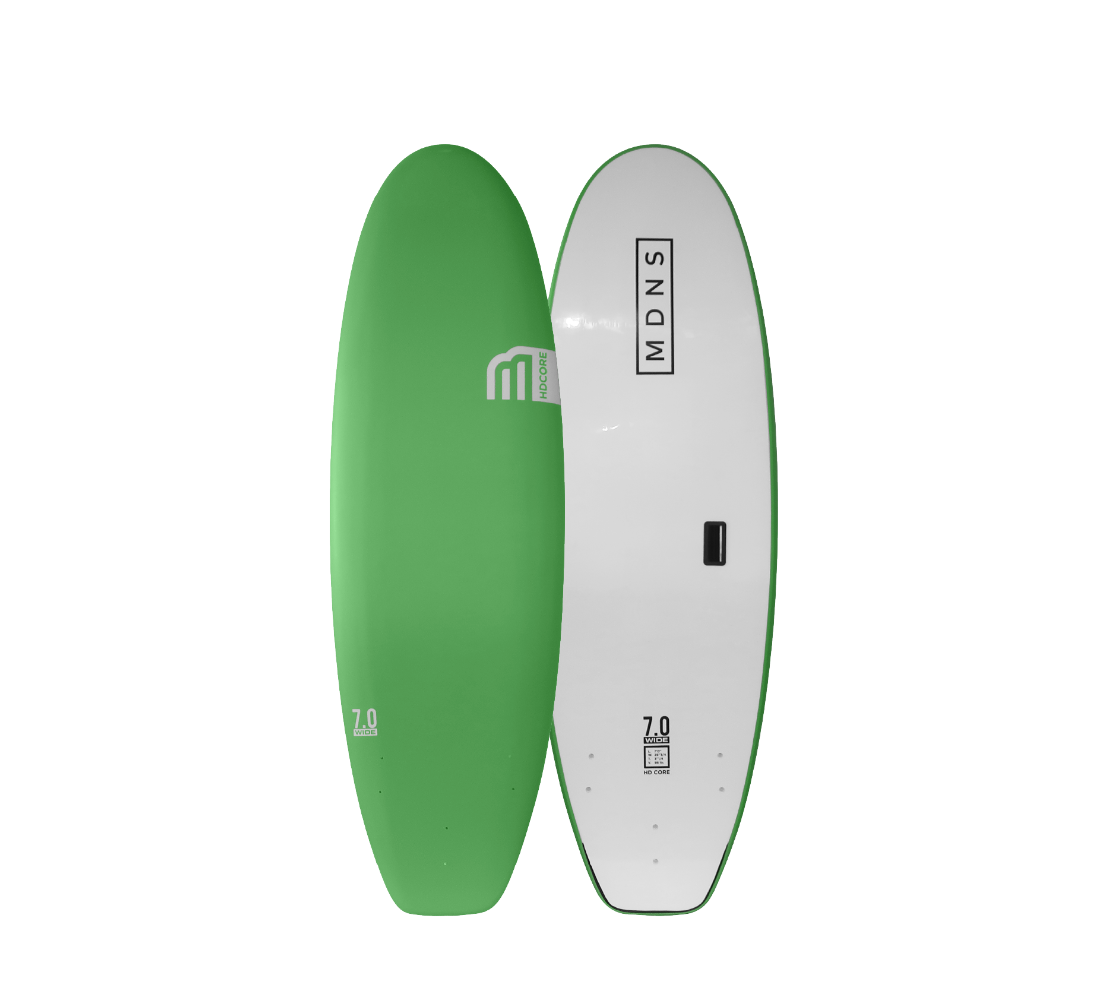
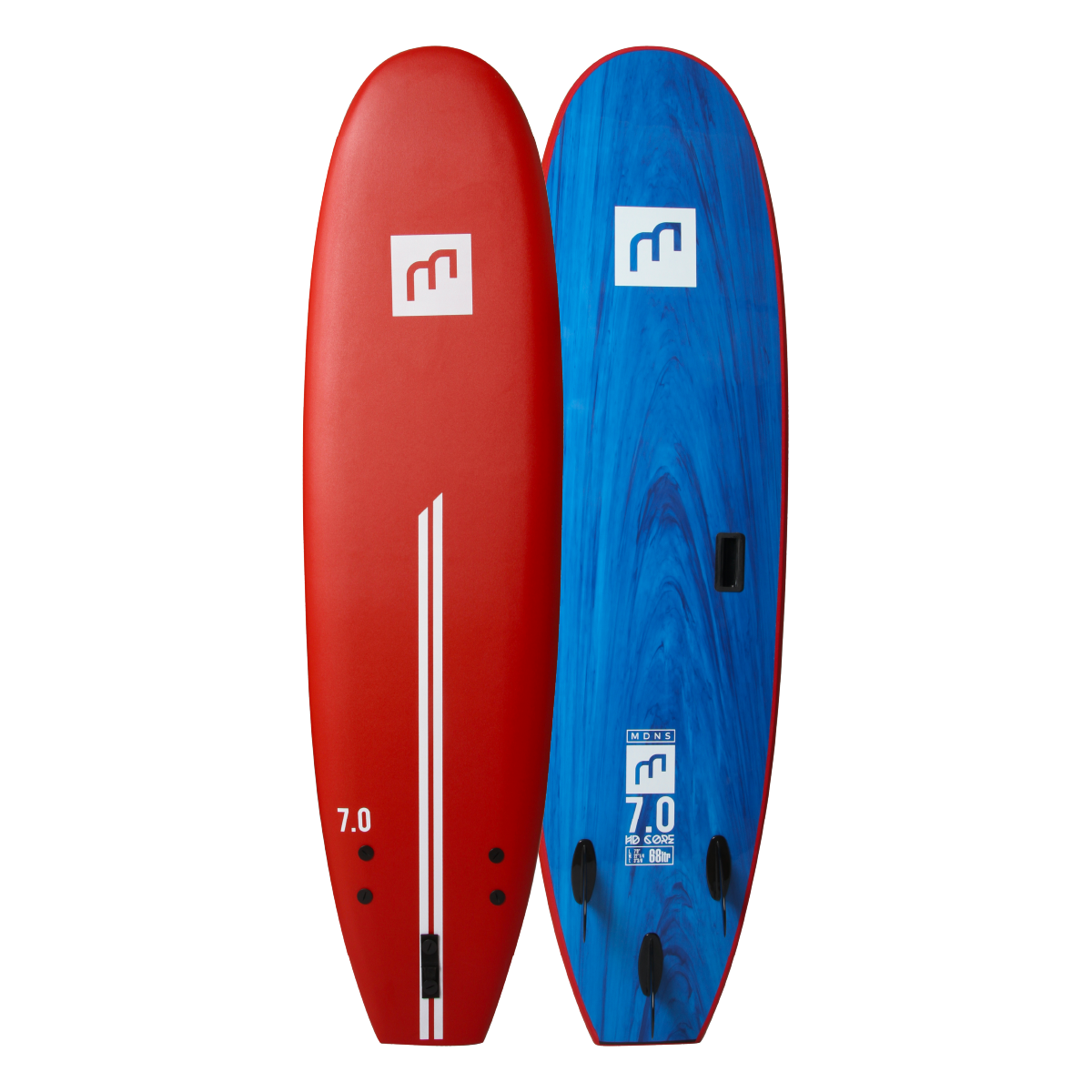
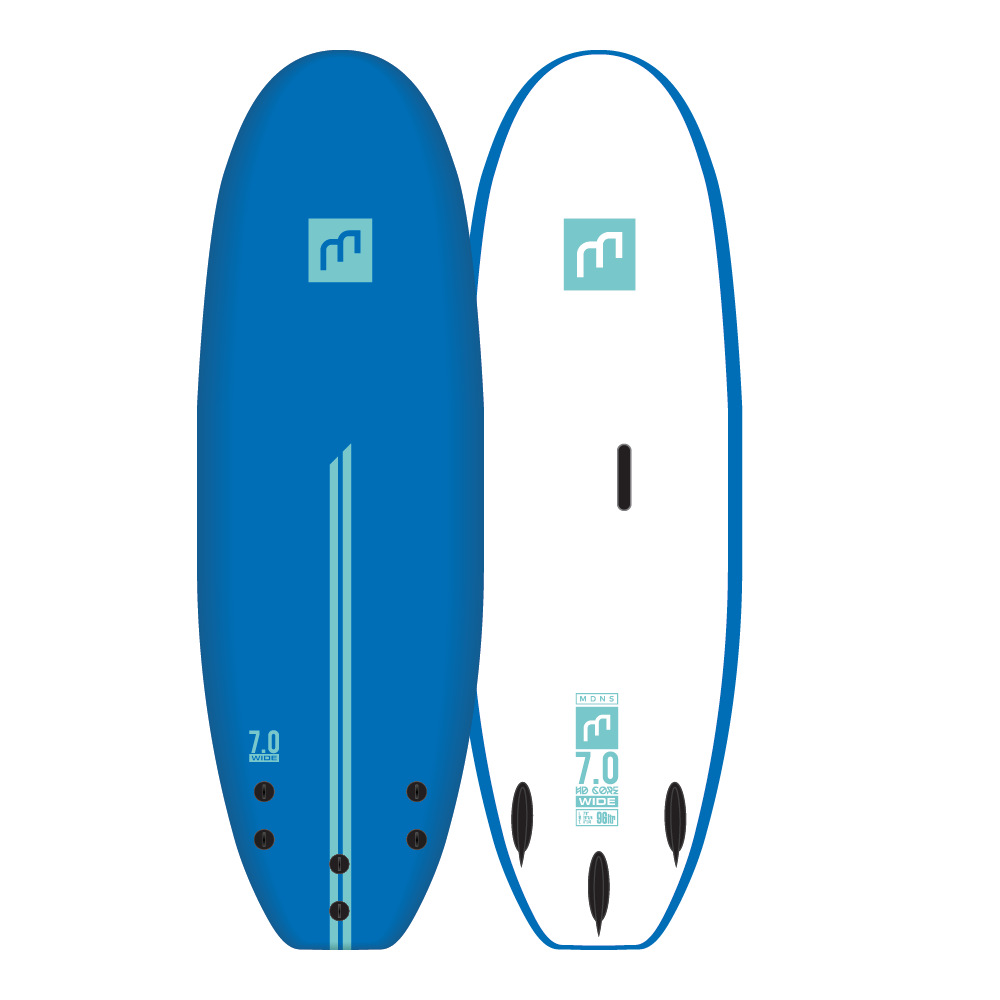
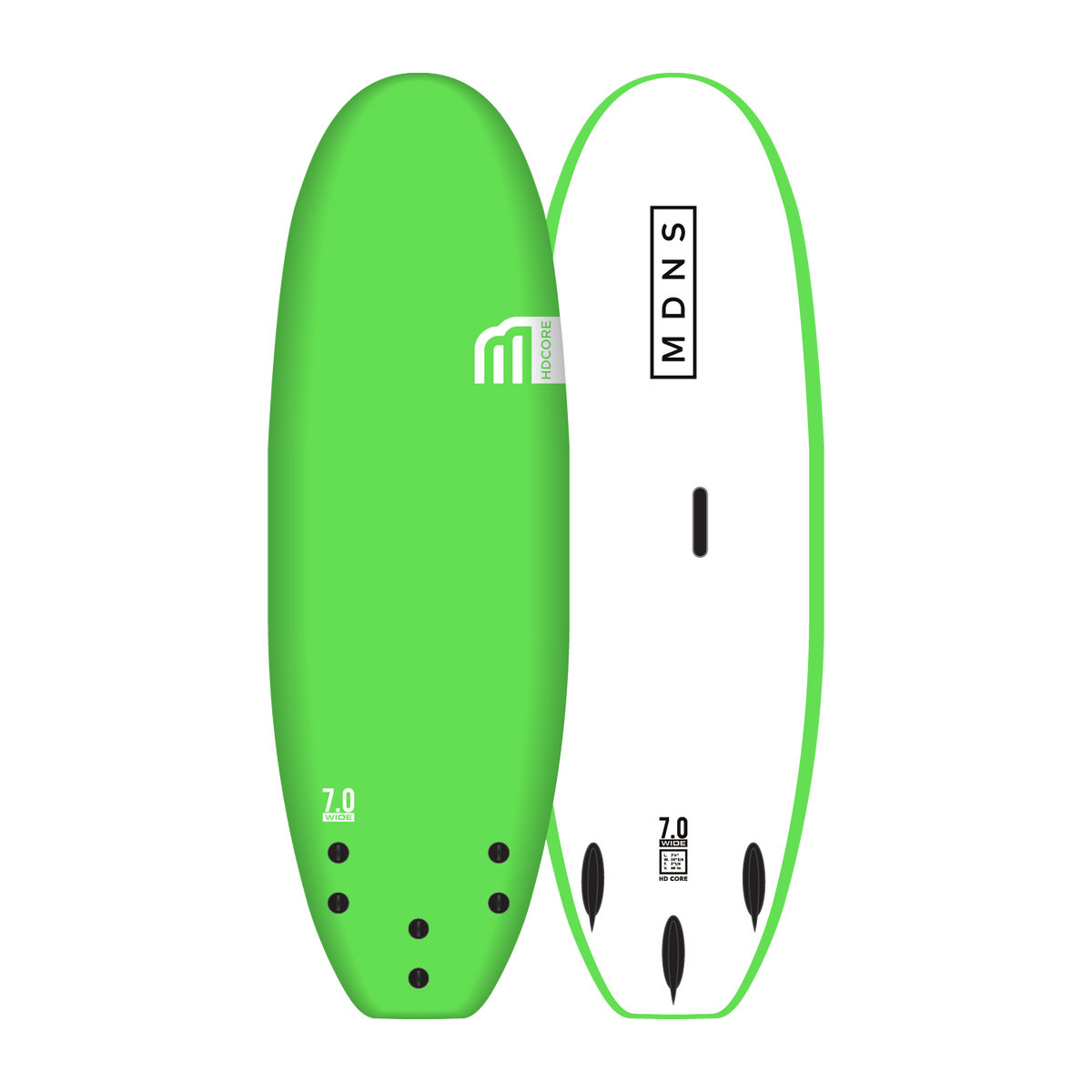
A 7'0 beginner surfboard may suit some body types and surfers looking for a board that's less cumbersome than a longer model. Volume and width still matter: two 7-foot boards can ride very differently.
8'0 beginner surfboard
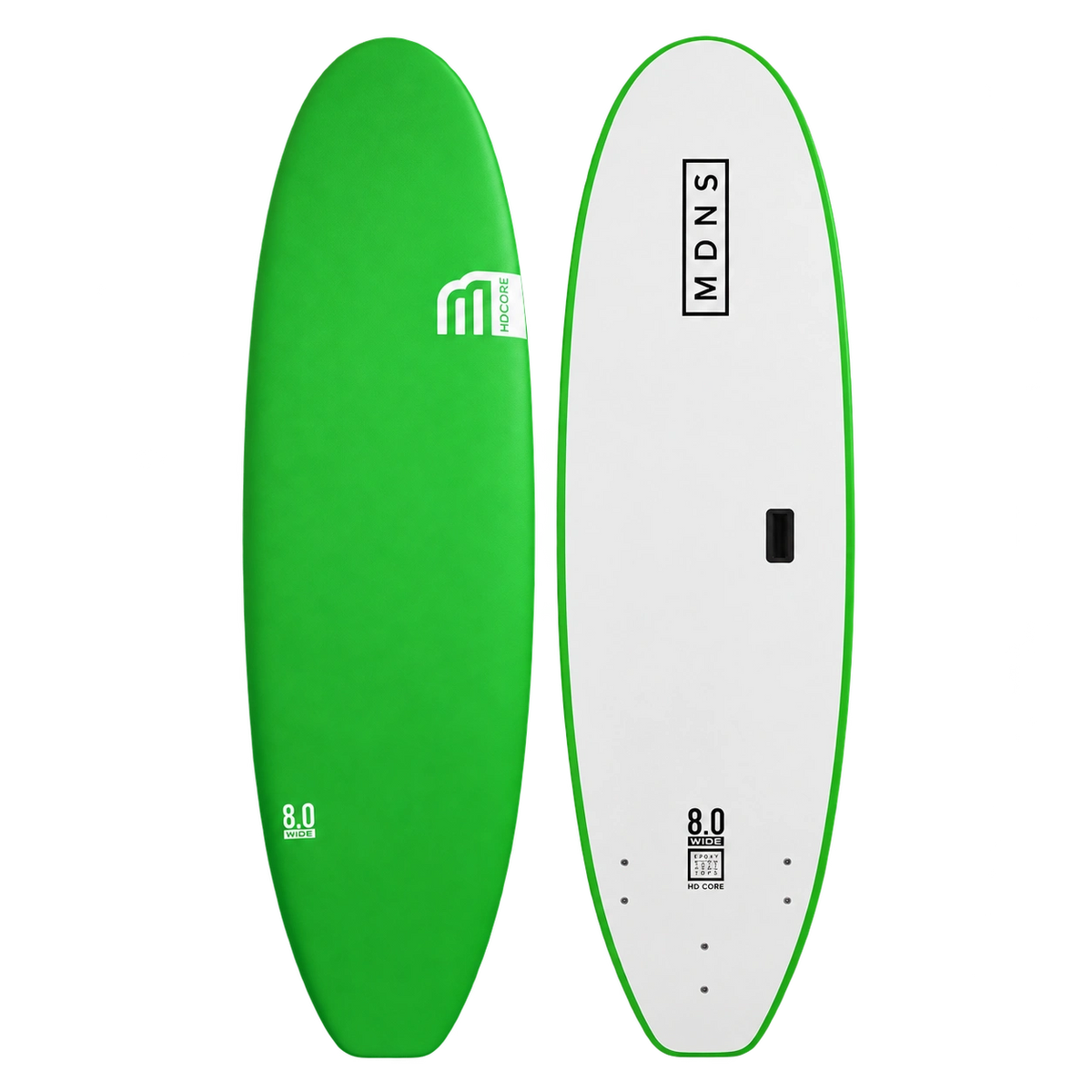
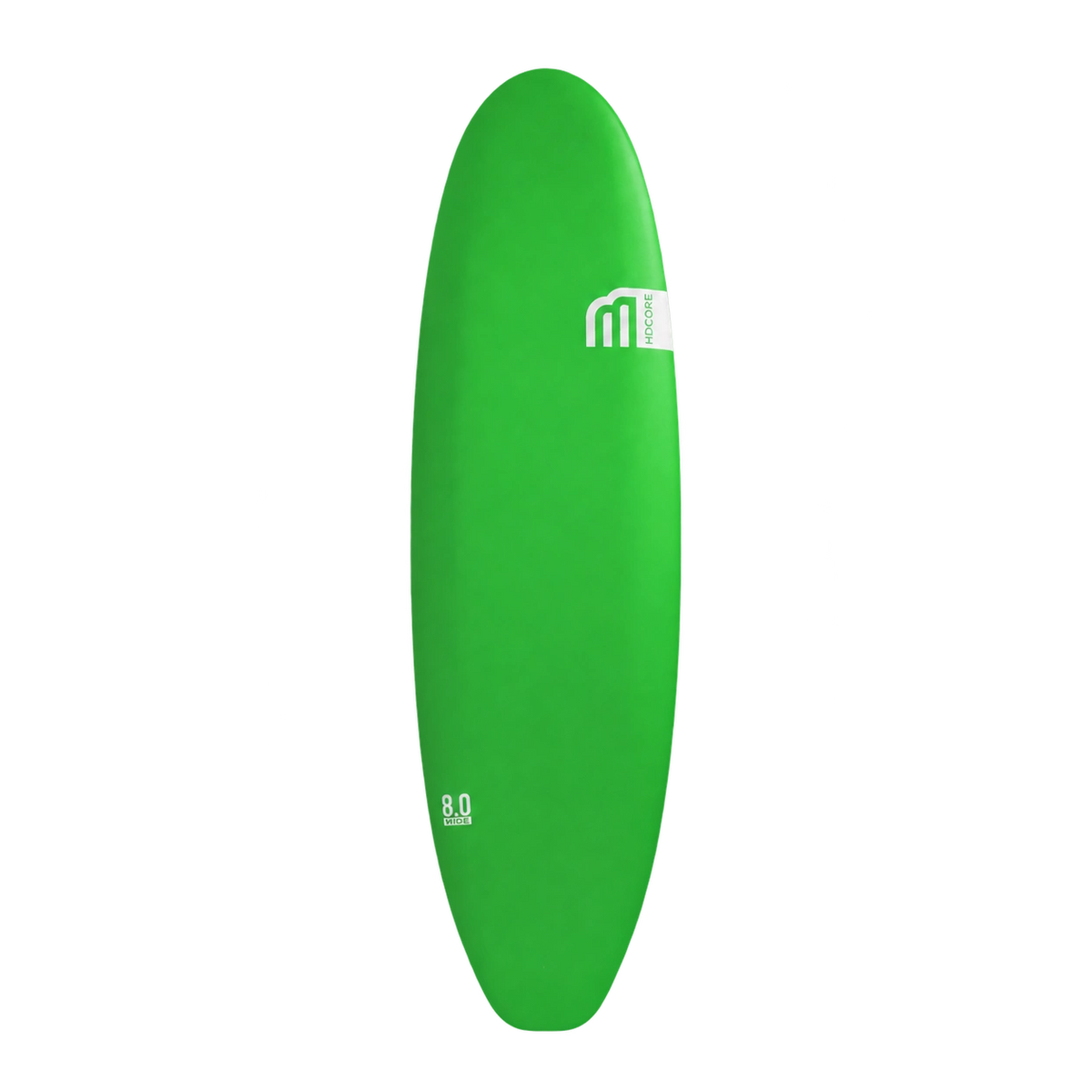
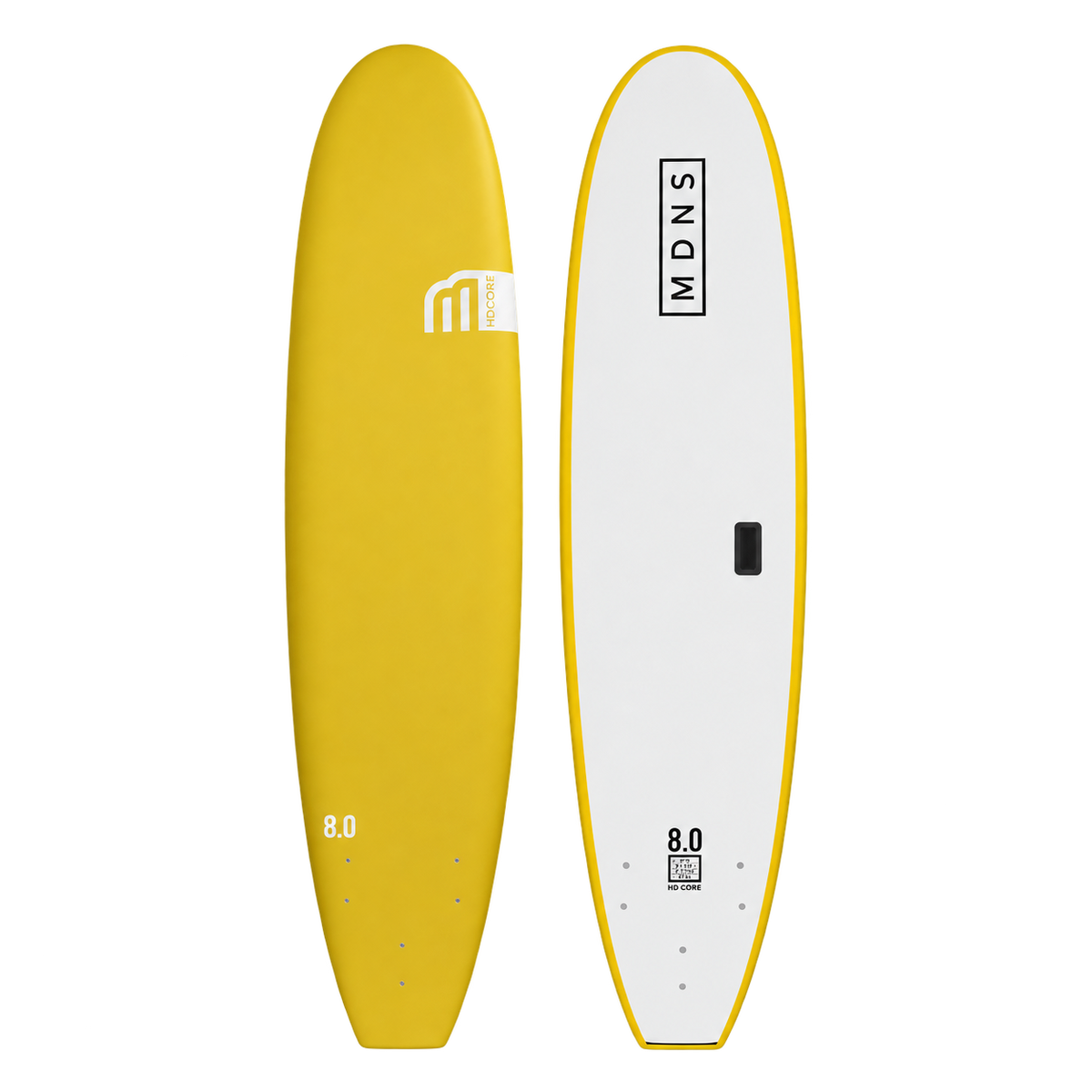
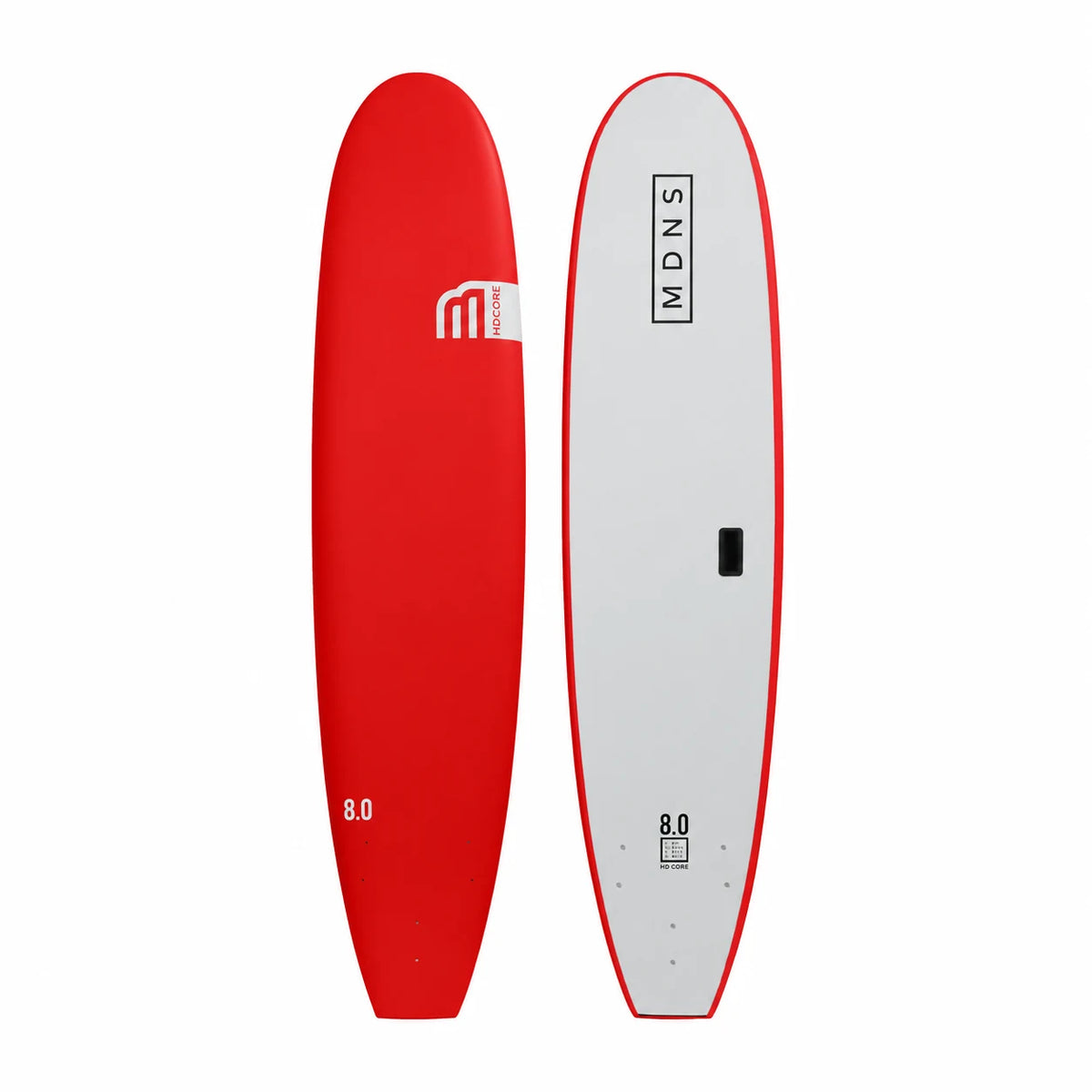
An 8'0 beginner surfboard can be a great option if you're looking for more stability and buoyancy. This size is commonly associated with learning to surf, especially when it has plenty of volume and a suitable outline.
8'6 beginner surfboard
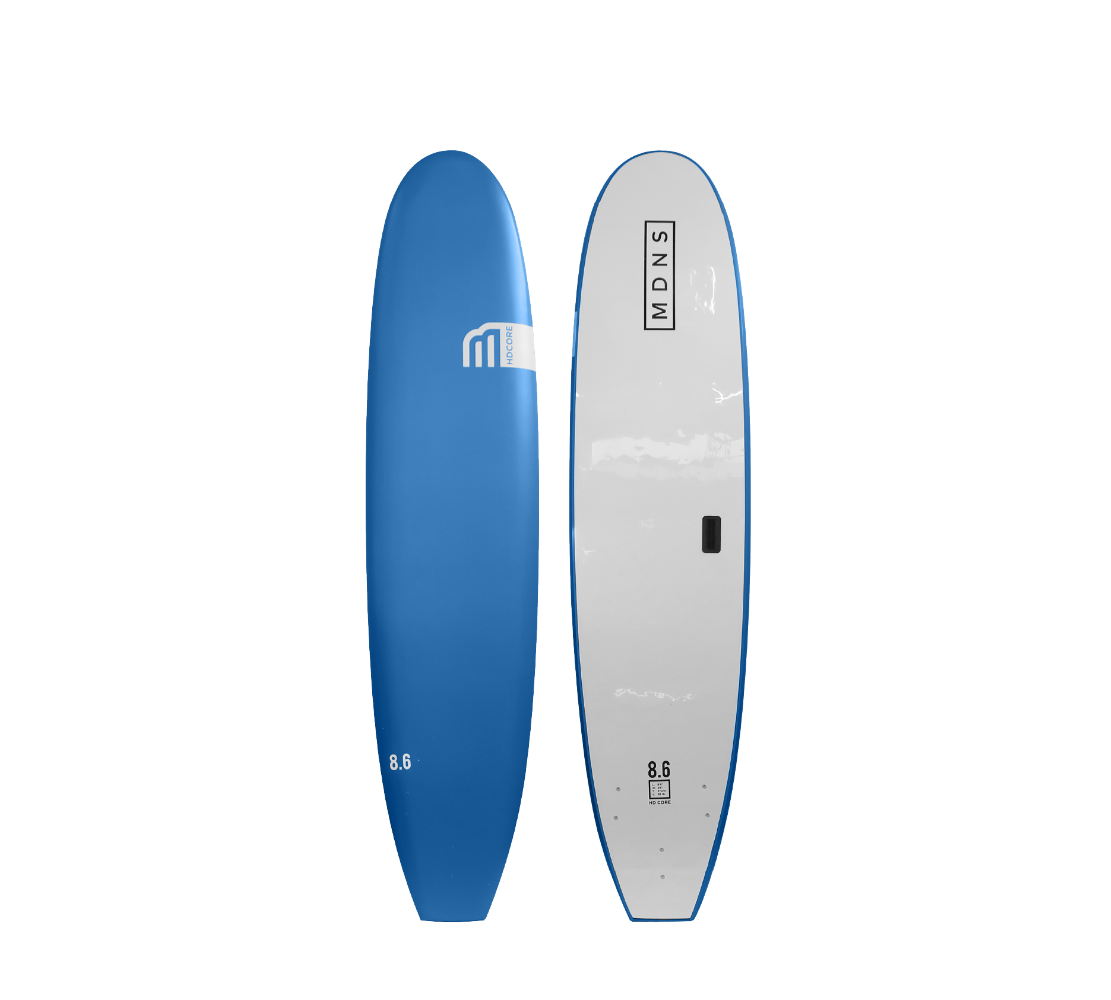
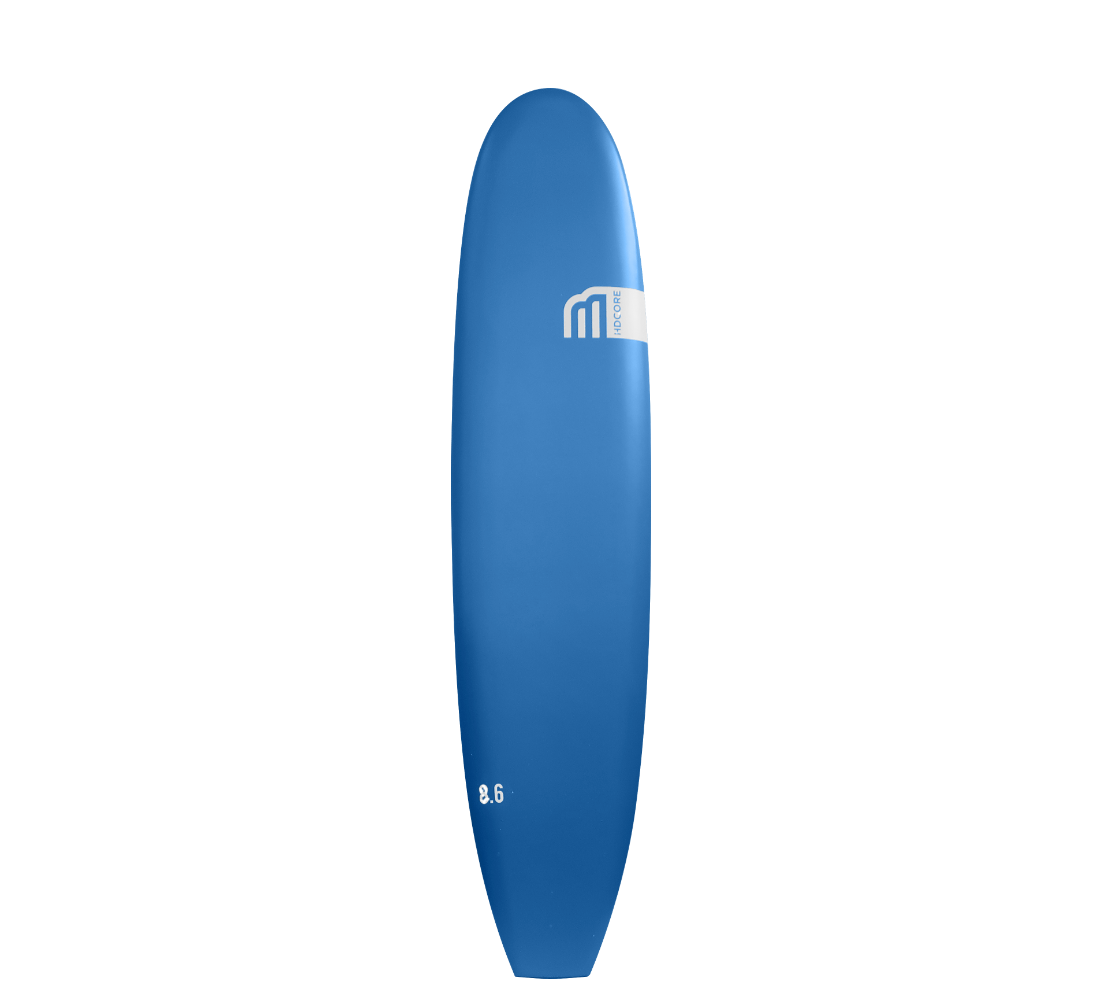
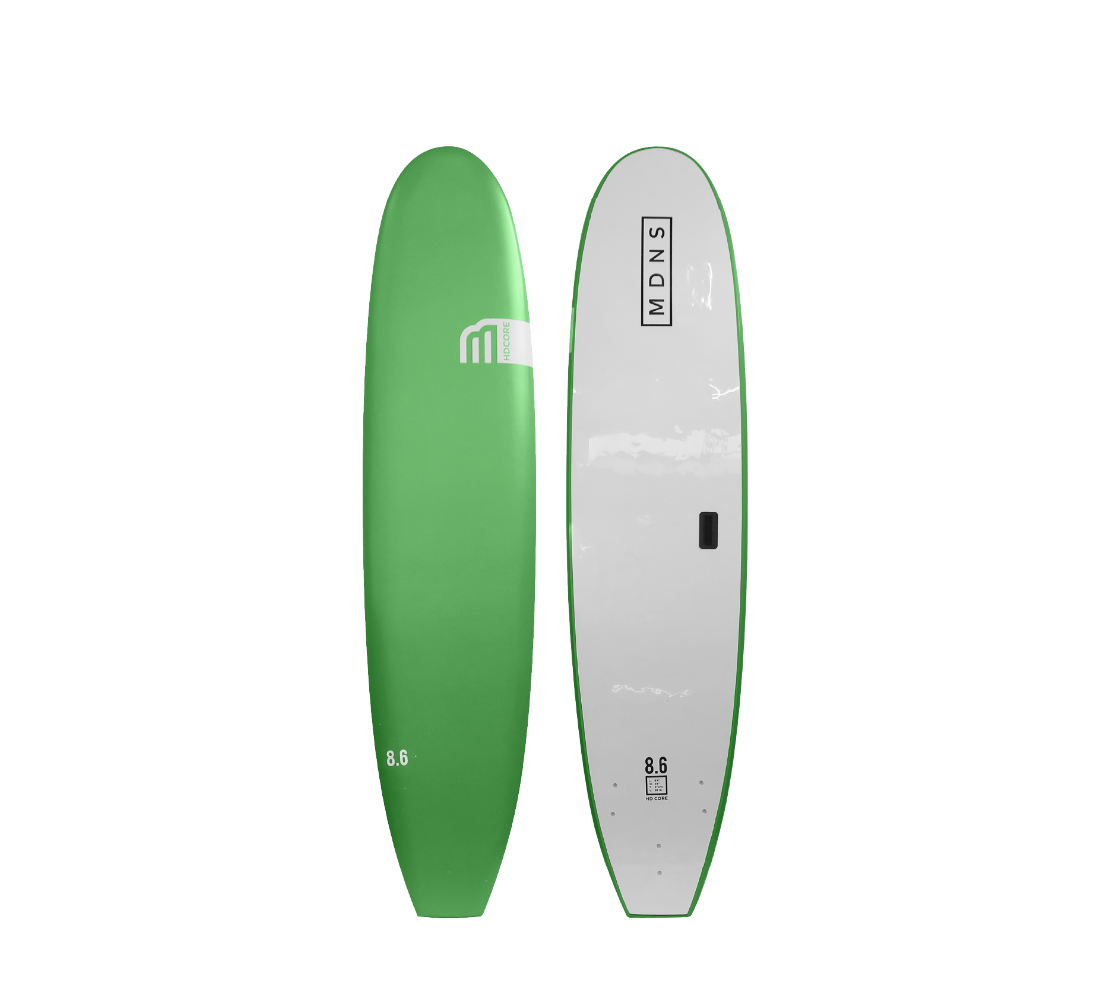
An 8'6 board can provide plenty of surface area and buoyancy, depending on its construction. It may suit some adults or surfers looking for stability and the ability to catch small waves.
Before choosing, always check the exact dimensions and volume of each MDNS model.
EPS Core and HD Core MDNS constructions
MDNS softboards come in different constructions. It's important to know the difference, as not all foam boards have the same internal structure or surfing characteristics.
MDNS EPS Core softboards
EPS Core models combine an EPS core with a soft outer layer. This construction is available on several MDNS board shapes. Volume and dimensions vary by model, so check the specifications for your chosen board.
MDNS HD Core softboards
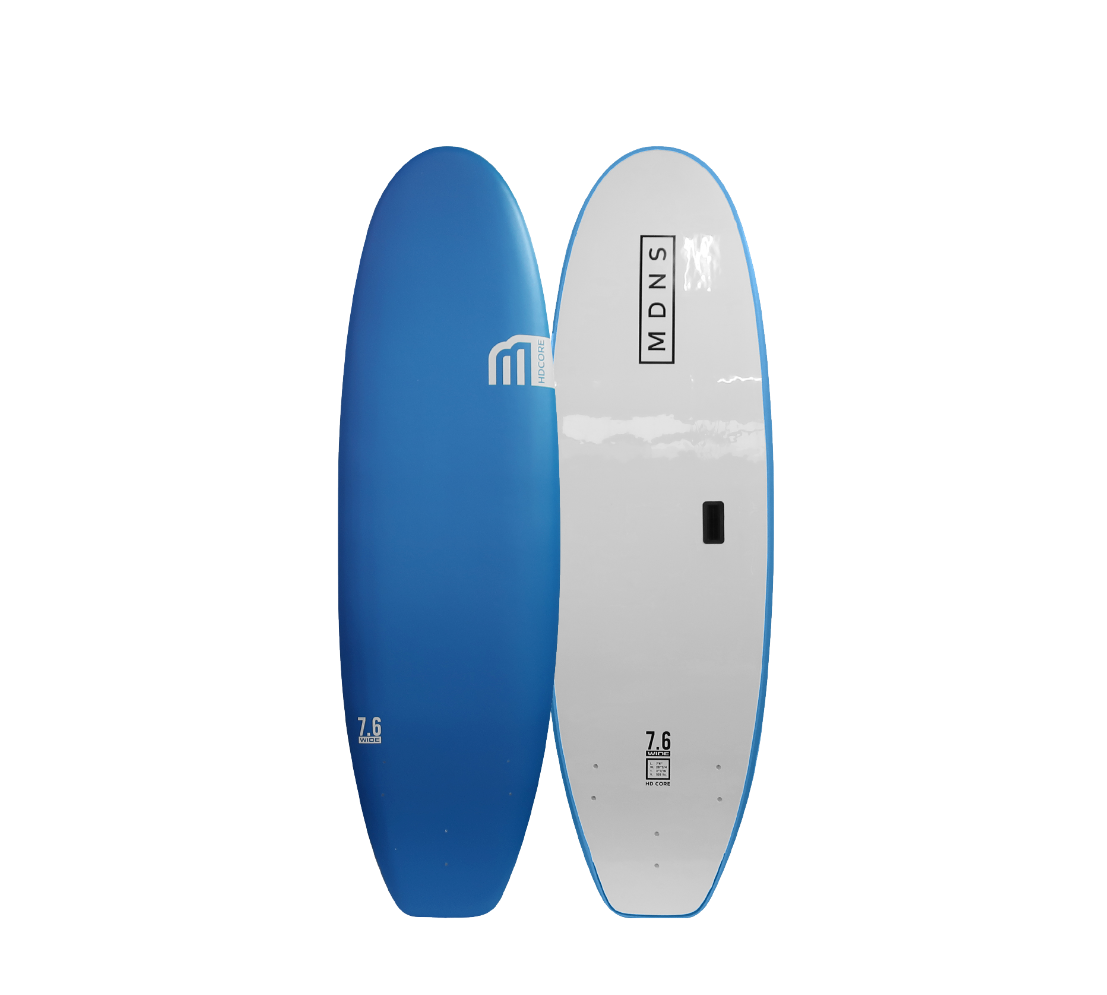
HD Core models feature a distinct construction, including a high-density EPS core on the relevant models. Some models combine an IXL PE foam deck with an HDPE bottom.
These construction differences should be considered alongside length, width, and volume. Choosing a board isn't just about its name or size.
Beginner surfboards for adults and children: how to choose?
For an adult beginner, the goal is to find a board with enough buoyancy to make paddling easier and let you practice catching waves repeatedly. Larger surfers may need more volume.
For a child learning to surf, the choice depends on their weight, height, confidence in the water, and supervision. A board should suit their build and be easy enough to handle in suitable conditions.
In either case, starting out in suitable waves and, if possible, getting tips from a surf instructor will help you progress with more confidence.
How can you progress with your first surfboard?
The right board makes learning easier, but consistency and choosing the right conditions remain essential. Your first sessions are mainly about learning the fundamentals before trying to perform maneuvers.
- Working on your prone position: learning to distribute your weight properly on the board.
- Improving your paddling: developing an efficient, consistent stroke.
- Learning the take-off: moving from lying down to standing up.
- Choosing the right waves: stick to conditions suited to your level.
- Develop your balance: learn to steady your stance and follow the wave.
There’s no need to change boards straight away. A well-chosen softboard can support your progress as long as it continues to meet your needs.
Beginner softboard or classic surfboard?
Softboards are often the go-to choice for first sessions thanks to their soft surfaces and the availability of high-volume shapes. Other types of boards can also work for learning, depending on their shape, dimensions, and the surfer’s level.
The most important thing is to choose a board that lets you catch waves regularly and work on the fundamentals, rather than going for a model that’s too technical right from your first sessions.
To explore the brand’s other shapes and constructions, check out our MDNS surf softboards collection.
What gear do you need to start surfing?
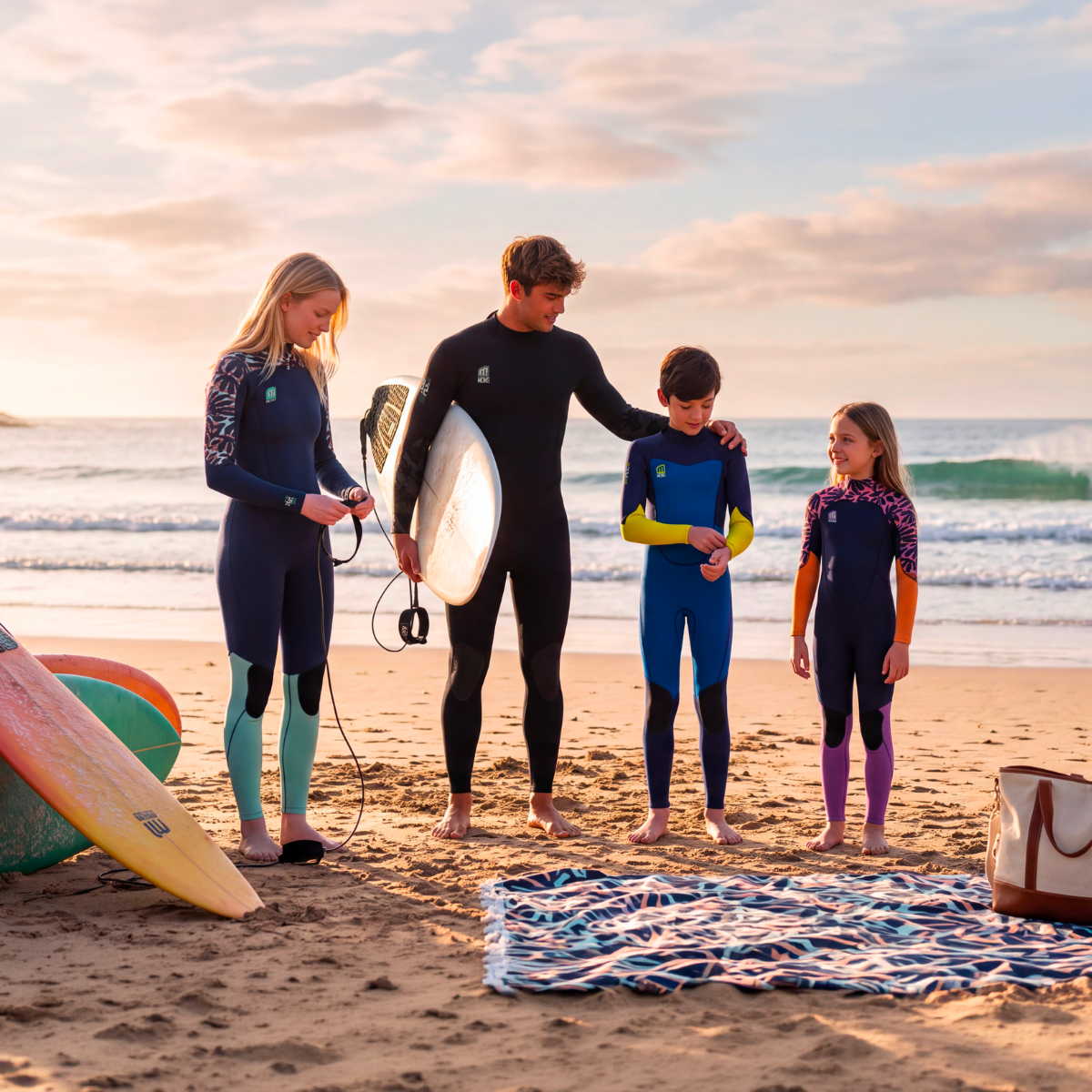
Alongside your board, a few accessories can help make your sessions more comfortable and suited to your needs.
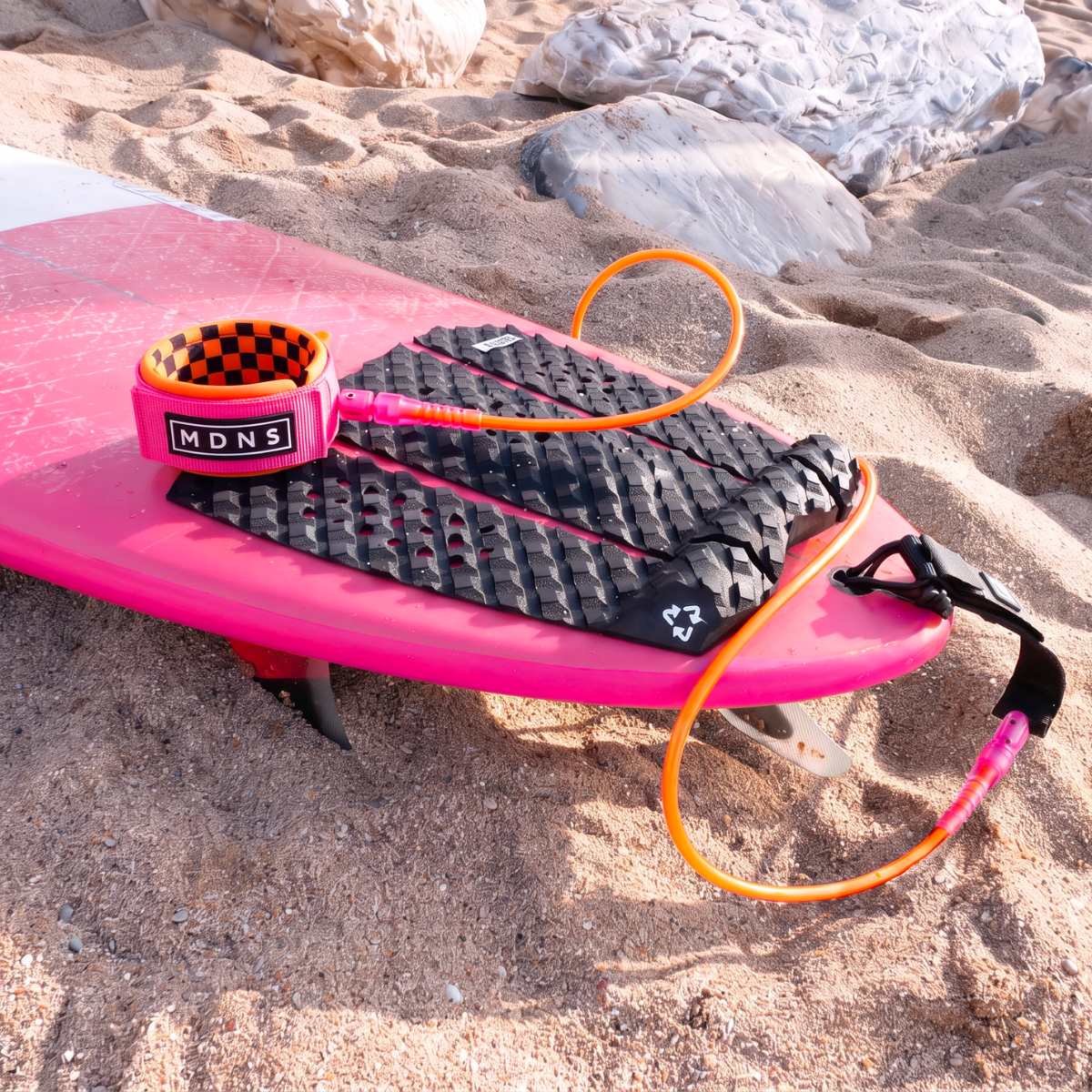
- A suitable leash: to attach the board to the surfer.
- A wetsuit: choose one based on the water temperature and season.
- A surfboard bag: to make transport easier and protect your board on the move.
- Transport accessories: for moving your board with care.
Discover our surf leashes, wetsuits, and surfboard bags to complete your gear.
Discover MDNS beginner surfboards
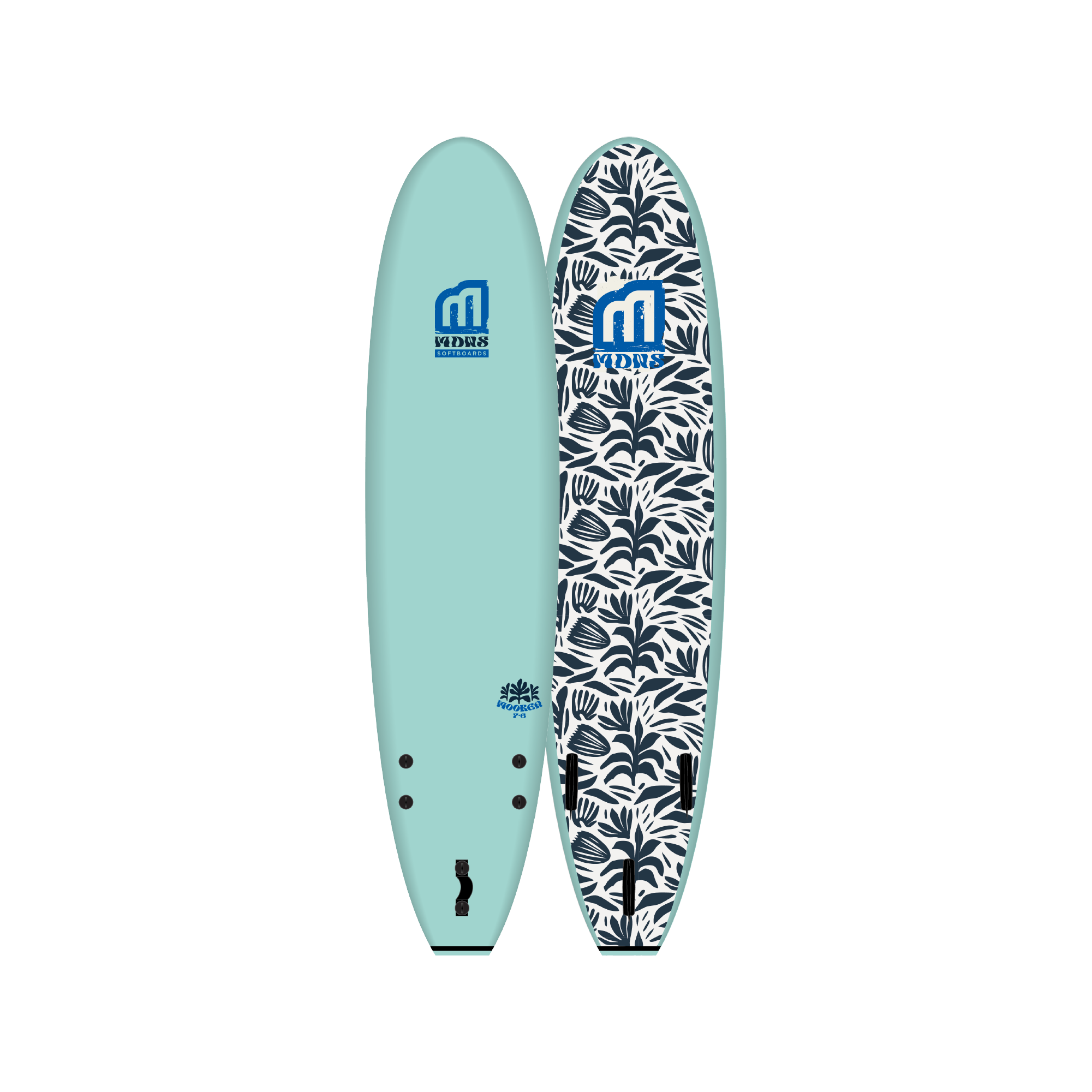
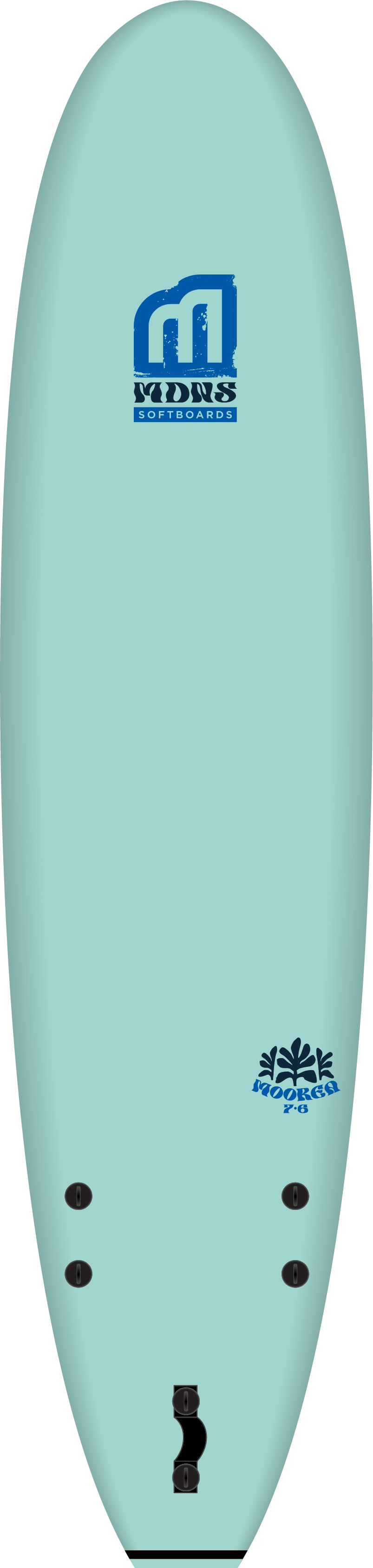
MDNS beginner surfboards come in a range of shapes and constructions to meet the needs of learners. Compare the lengths, volumes, and technical features of the softboards to find a board suited to your build and progression.
A first board that’s well suited to you should above all help you catch waves, build confidence, and enjoy surfing.
Filters
14 products


FAQ - Beginner softboards
Which surfboard should you choose to get started?
To get started with surfing, choose a stable board that's wide and voluminous enough for your build. A suitable softboard generally makes paddling, catching waves and learning to pop up easier.
Why choose a foam surfboard to get started?
Foam surfboards have a soft covering and come in sizes suited to learning. They let you work on the basics of surfing, including paddling, balance, and catching your first waves.
What size surfboard should an adult beginner get?
Sizing depends on your weight, body shape, and comfort in the water. 7'0, 8'0, or 8'6 boards can suit different needs, but volume and width matter just as much as length.
What volume should I choose for my first surfboard?
The volume, expressed in liters, contributes to the board’s buoyancy. Beginners generally benefit from choosing a board with plenty of volume suited to their weight. The board’s shape and dimensions should also be taken into account.
Is a soft-top board suitable for an adult beginner?
Yes, a softboard can be a great choice for an adult learning to surf. Choose a model with enough buoyancy and stability for your build and the conditions you’ll be surfing in.
What's the difference between an EPS Core softboard and an MDNS HD Core?
The two ranges use different constructions. EPS Core boards have an EPS core with a soft outer layer. The HD Core boards in question use a high-density EPS core, among other features. The exact materials and specifications vary by model.
Can you improve with a beginner surfboard?
Yes. The right board can support you through several stages of progression, from catching your first whitewater waves to taking off on unbroken waves when conditions are right. There’s no need to move to a shorter board too soon.
What gear do you need to start surfing?
To get started, make sure you have a suitable board, a leash of the right length, and a wetsuit suited to the water temperature. A board bag can also come in handy for transport and storage.