


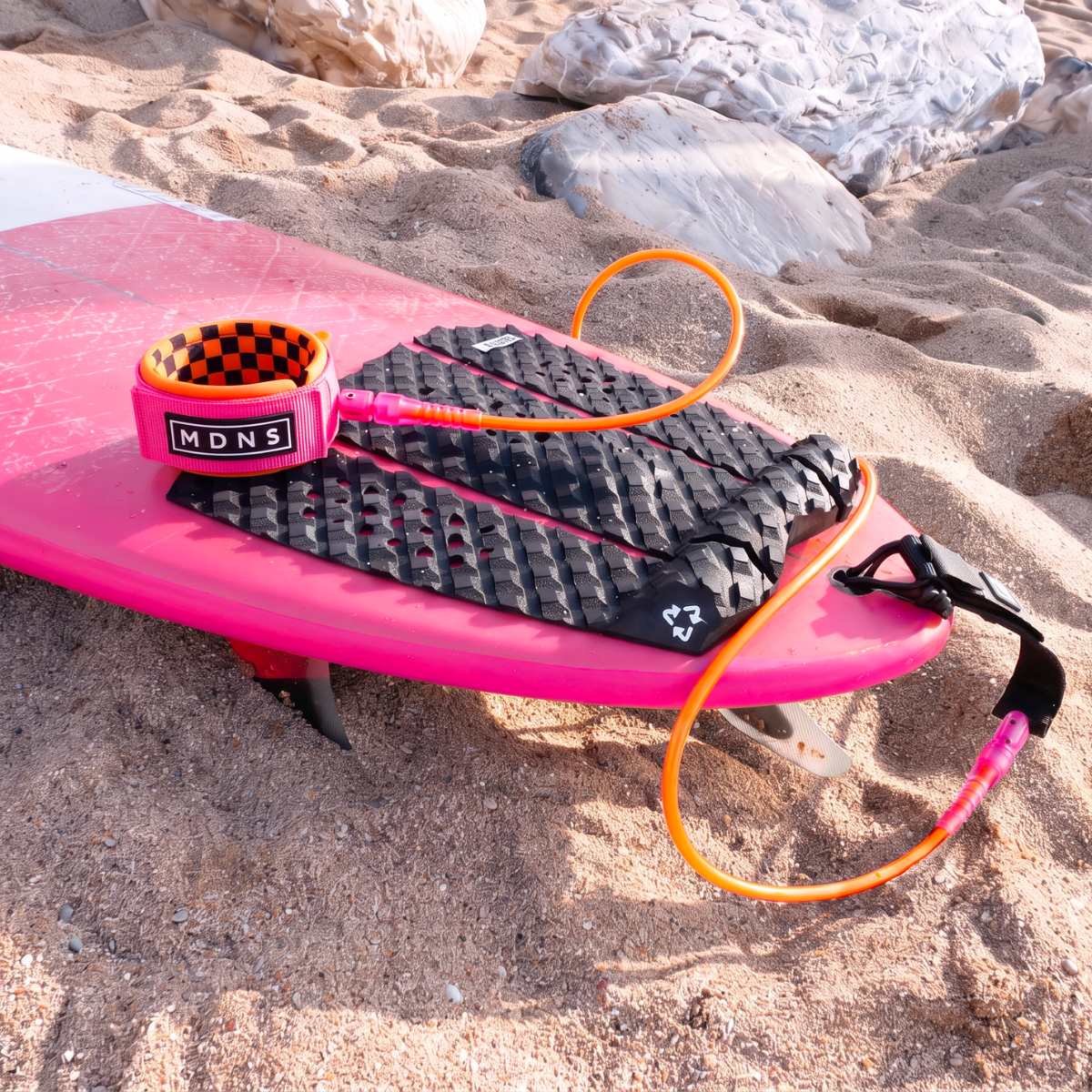

Surf pads
Discover MDNS surf traction pads, designed to improve grip and board control during your sessions. Also known as a surf grip or traction pad, a pad is attached to the deck of your board to provide stable footing, especially under your back foot when turning and maneuvering.
Explore our 1-, 2- and 3-piece surf traction pads, junior models and recycled EVA options. With a range of shapes, textures and configurations, MDNS pads let you tailor your footing to your style of surfing. Complete your setup with our MDNS surf leashes to keep your board connected to you after a wipeout.
See more
How to choose a surf traction pad
When choosing a surf traction pad, consider your board's tail shape, the available space under your back foot and the feel you're after. The number of pieces, grip texture, central arch and rear kick height all affect foot placement and board control.
1-piece surf traction pad: simple and precise placement
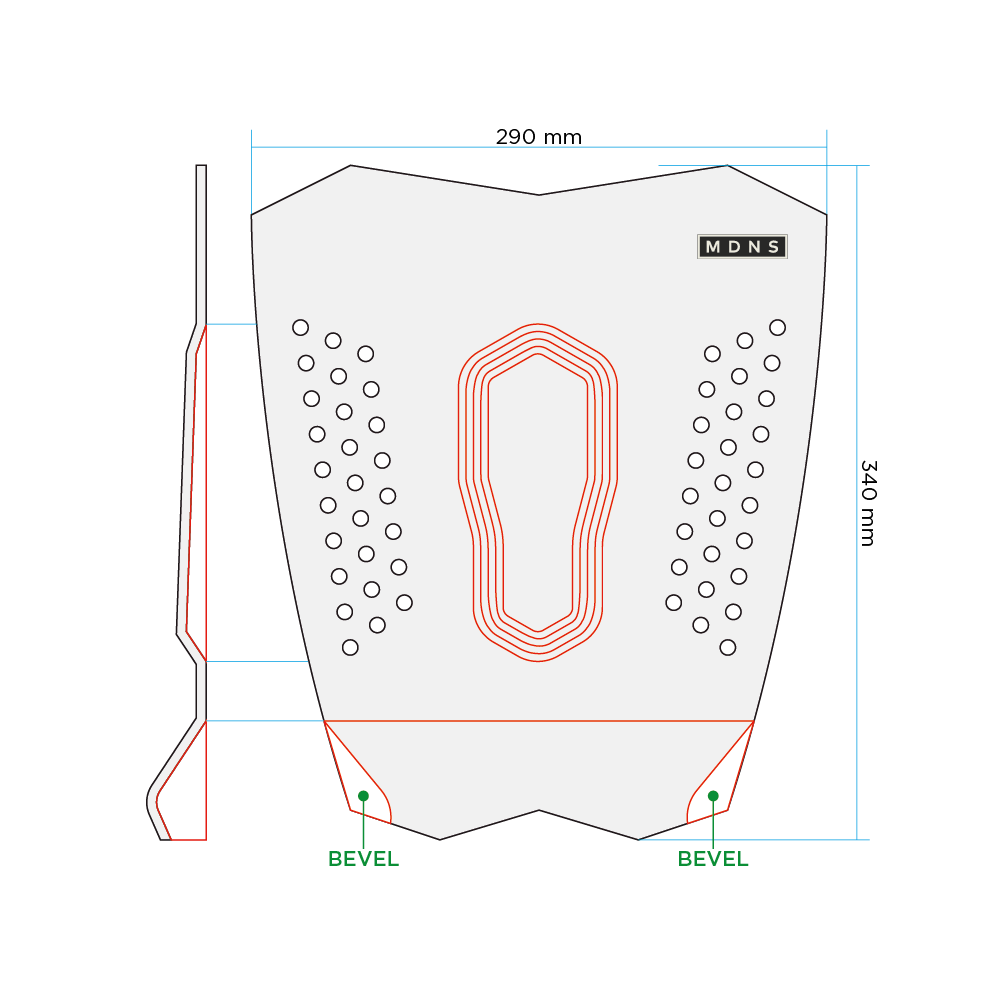
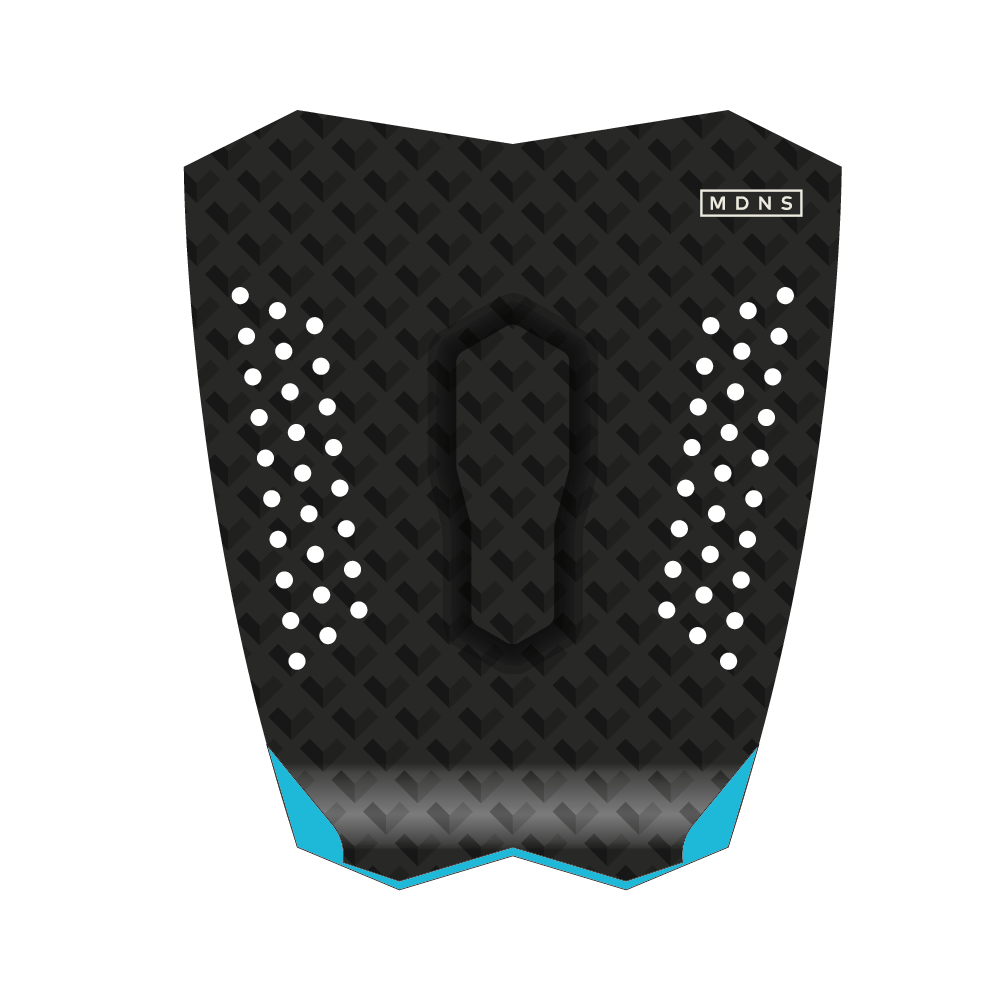
A 1-piece surf traction pad has a single, continuous surface that's easy to position on the tail. The MDNS range includes the Single Traction, Scut Traction and Junior Traction, among others. Features vary by model: some have a central arch, while others favor a simpler textured surface.
Before choosing, check the pad dimensions and tail width. For a foam board, also make sure the adhesive is compatible with your surf softboard deck.
2-piece surf traction pad: match the grip to your tail width
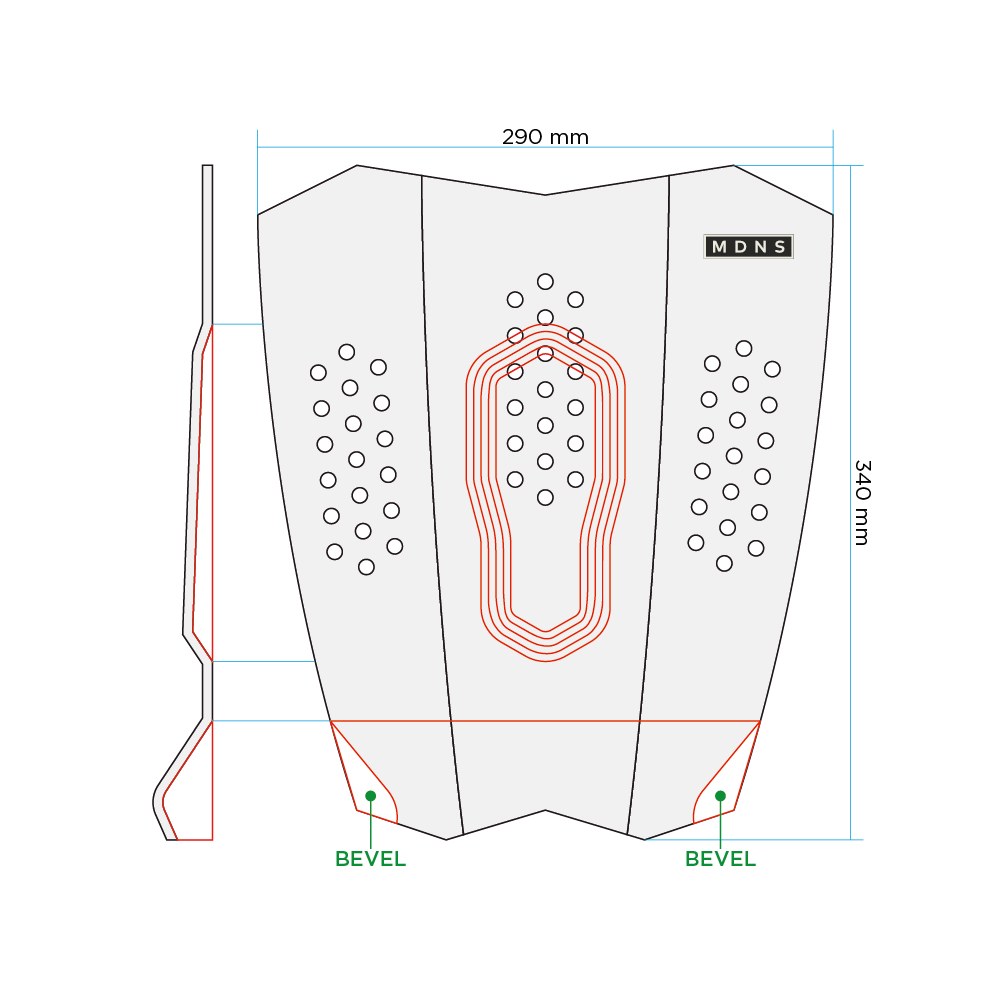
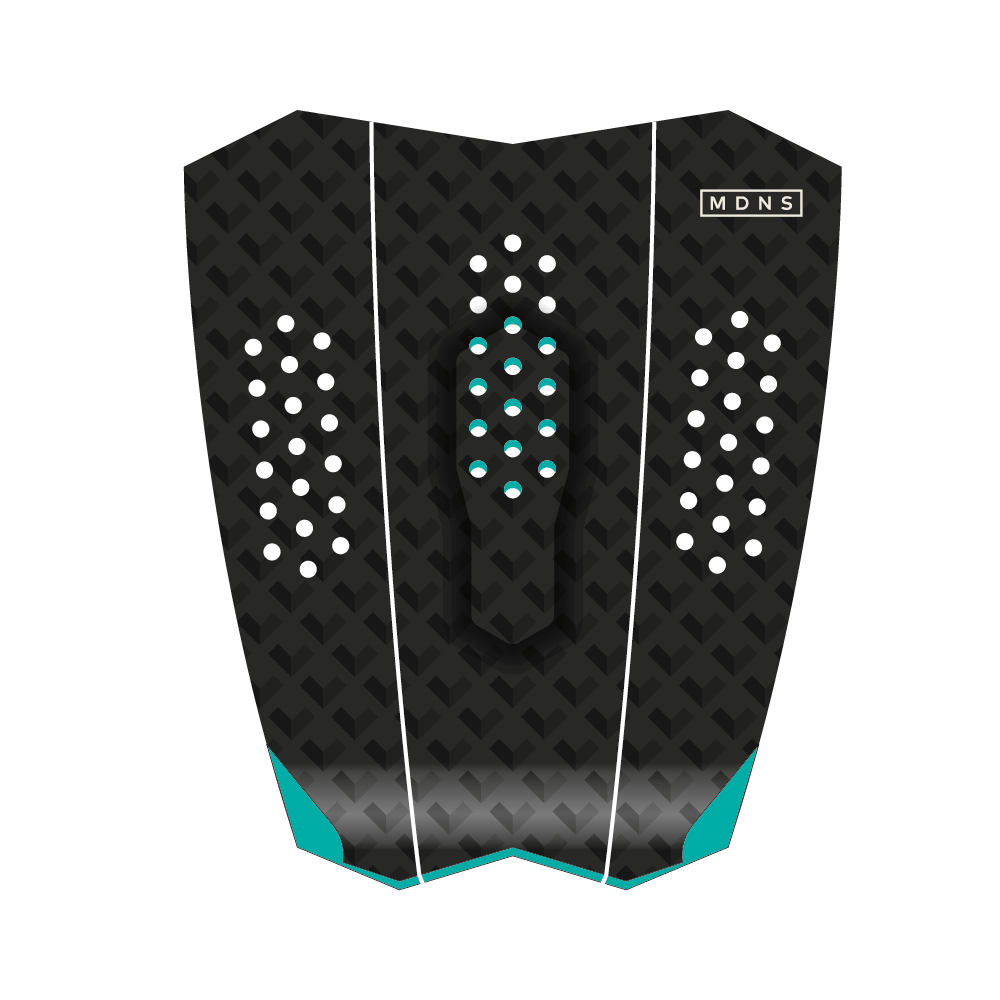
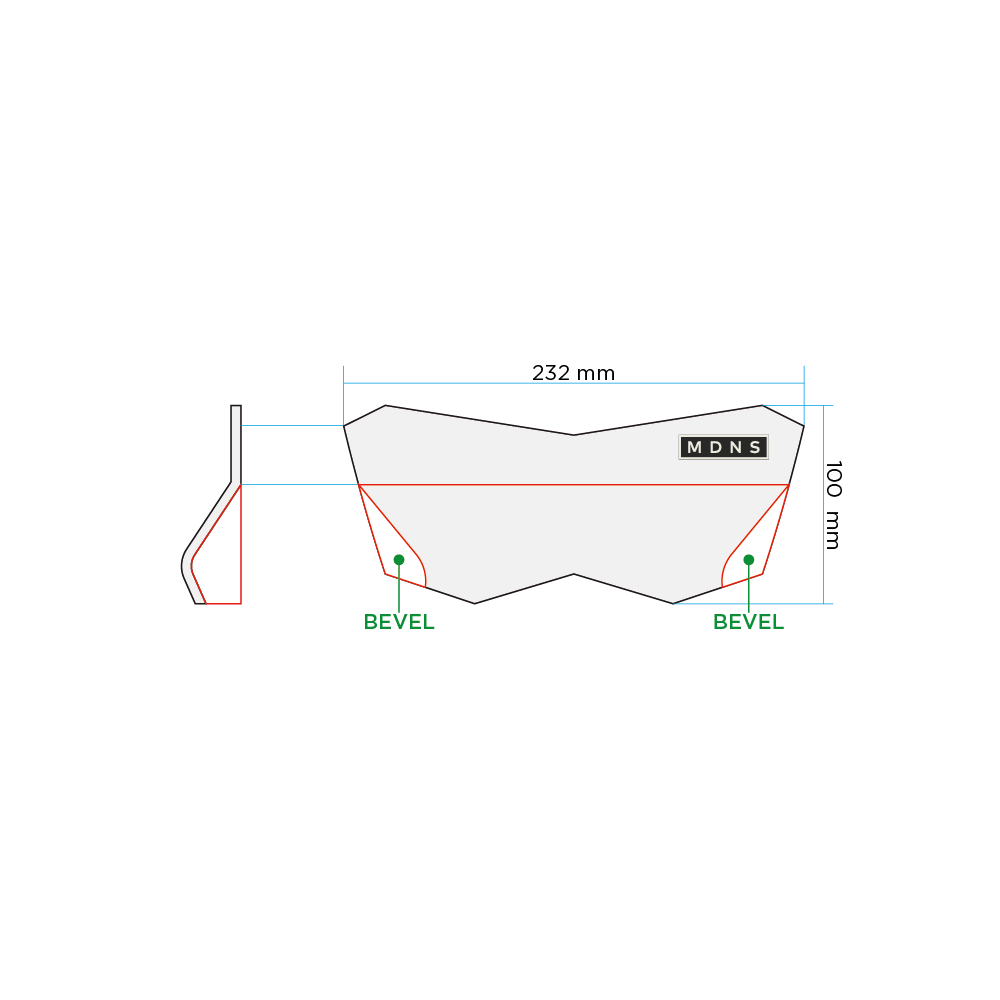
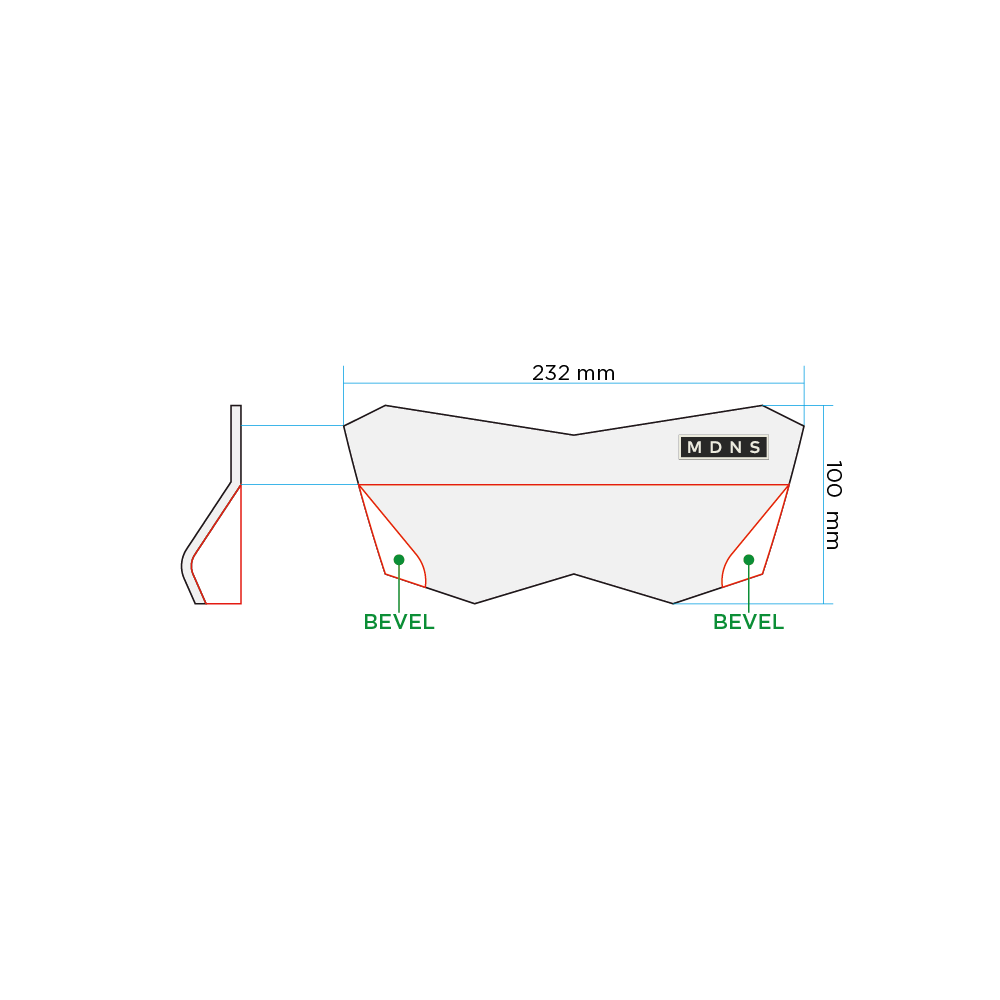
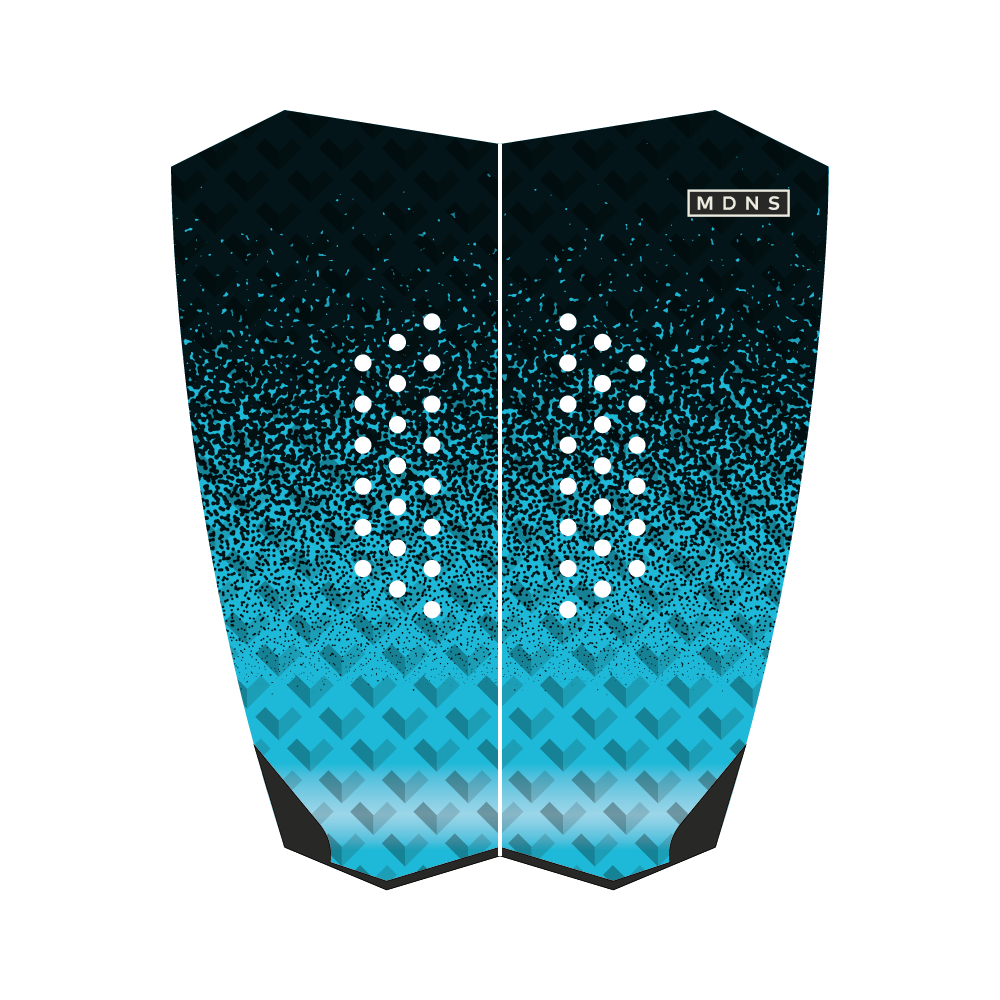
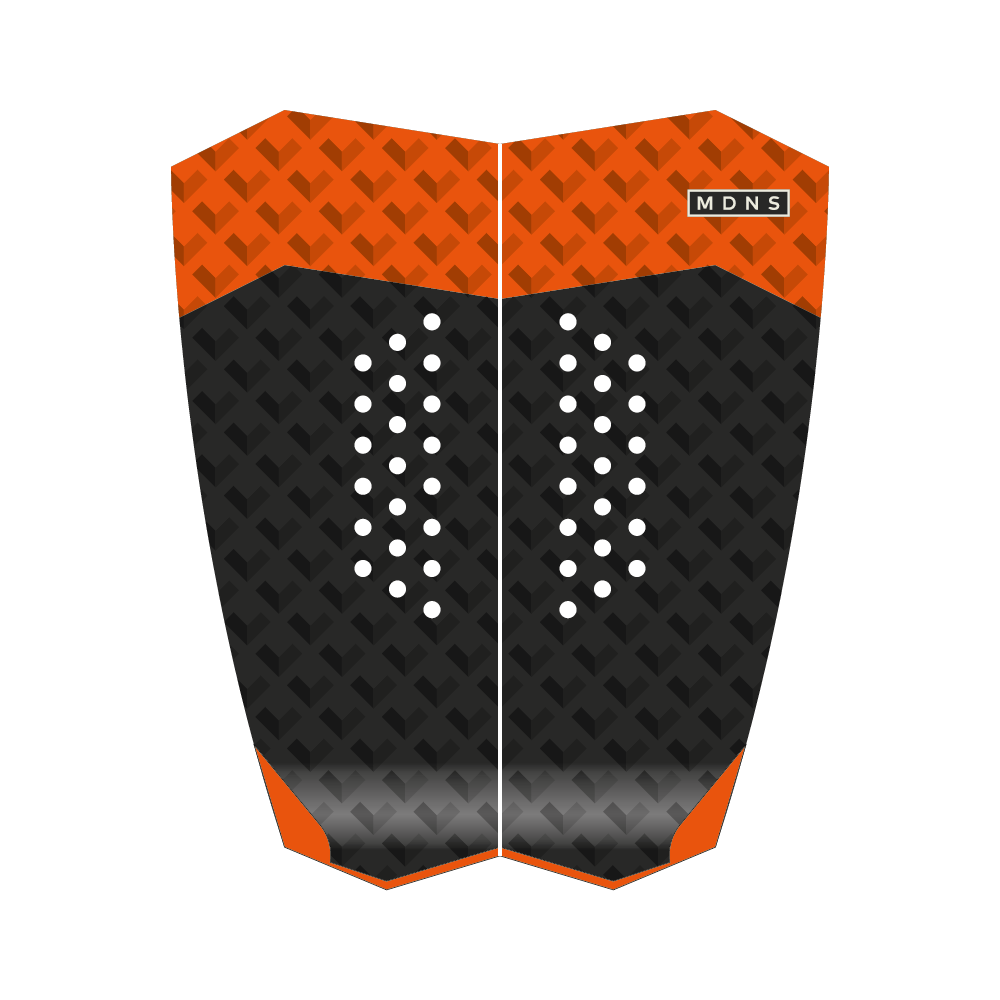
A 2-piece surf traction pad lets you space the two sections apart to match the grip area to your board's shape. The MDNS Double Traction combines a square-pattern texture, a beveled rear kick and 3M Greenbase adhesive.
This configuration is a good option if you want customizable placement on a shortboard, fish or hybrid board, as long as you check the pad dimensions.
3-piece surf traction pad: adjustable grip
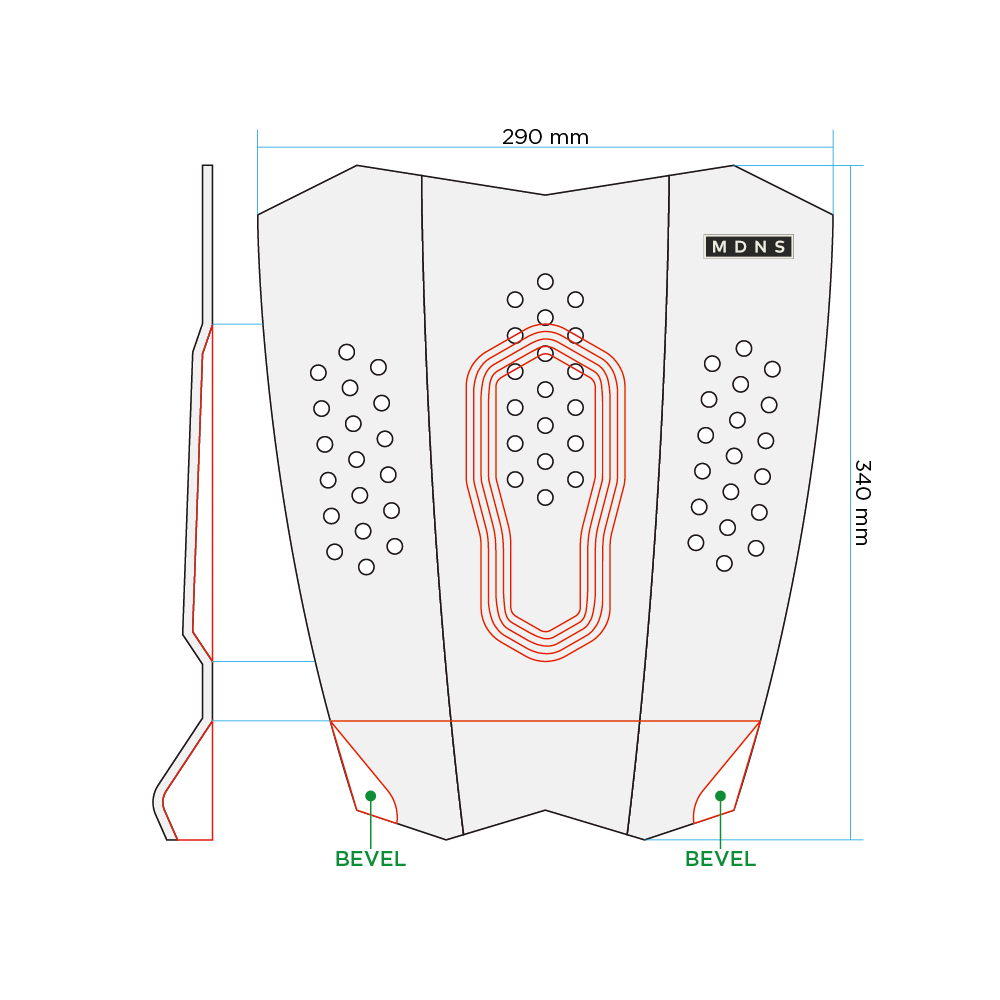
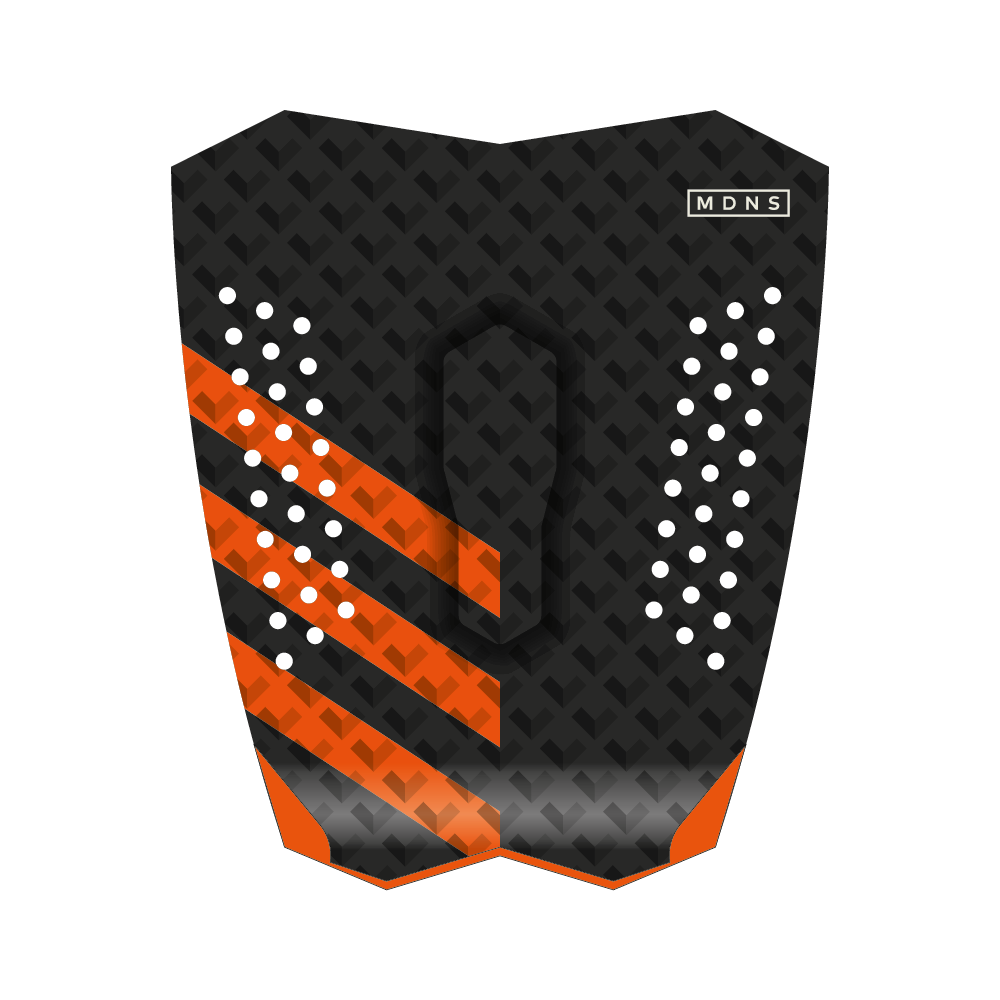
A 3-piece surf traction pad consists of several separate sections, allowing you to adjust the spacing across the tail. MDNS offers the Triple Traction and Screen Traction, among others, with different constructions depending on the model.
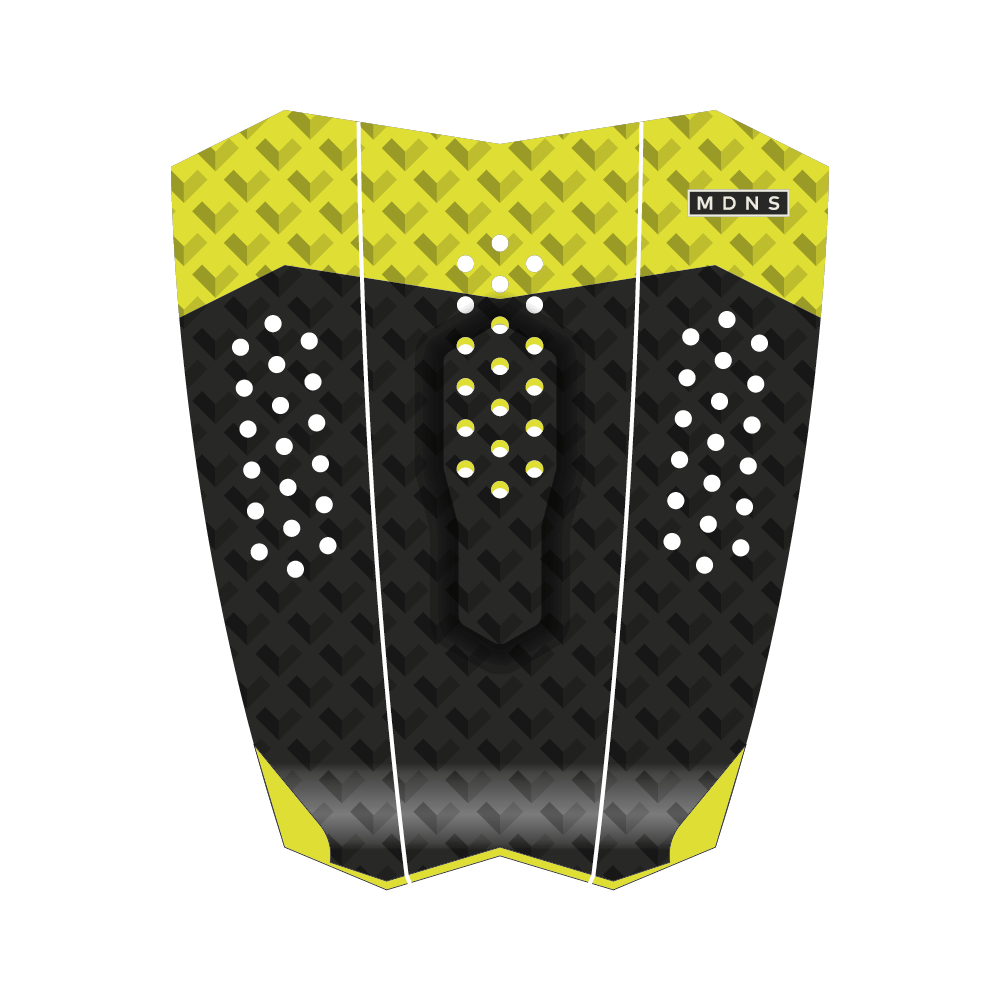
The Triple Traction features a square pattern and a beveled rear kick, while the Screen Traction has a three-piece configuration with a textured surface. The right choice depends on your board and where you want to place your back foot.
Kick tail, arch bar and texture: understanding traction pad features
The kick tail for better rear foot positioning
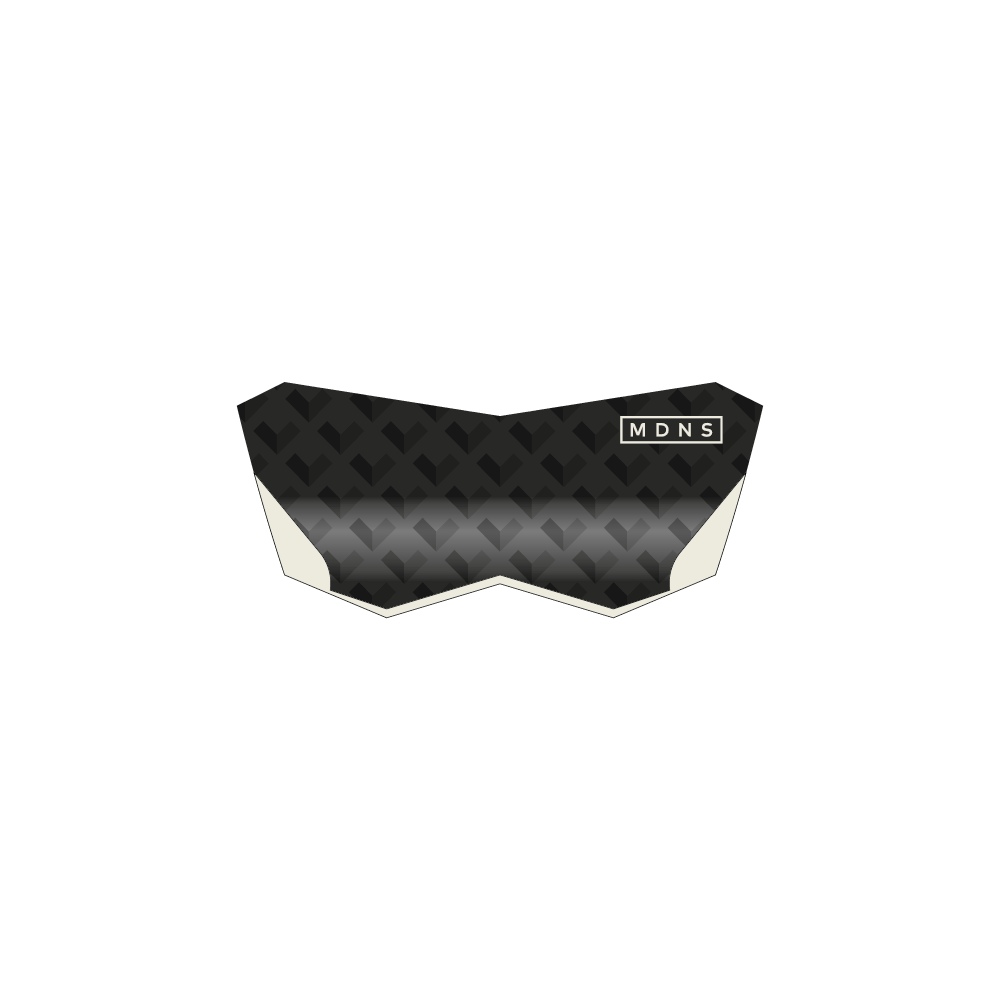
The kick tail is the raised section at the back of some surf pads. It helps surfers feel the limit of their rear foot pressure and apply pressure to the tail during maneuvers.
The MDNS catalog features a Bump Kick profile with beveled sides, designed to improve board control while reducing the risk of the edges peeling off.
The central arch or arch bar to guide positioning of the L
The L'arch bar is a raised center section found on some surf traction pads. It provides a reference point under the arch of your foot and can improve your sense of rear foot placement.
MDNS offers a Hive Arch Bar on some models, as well as an XL version on the Stem Traction. Not all pads in the collection have this feature: check the product details for your chosen model.
The square pattern for foot grip
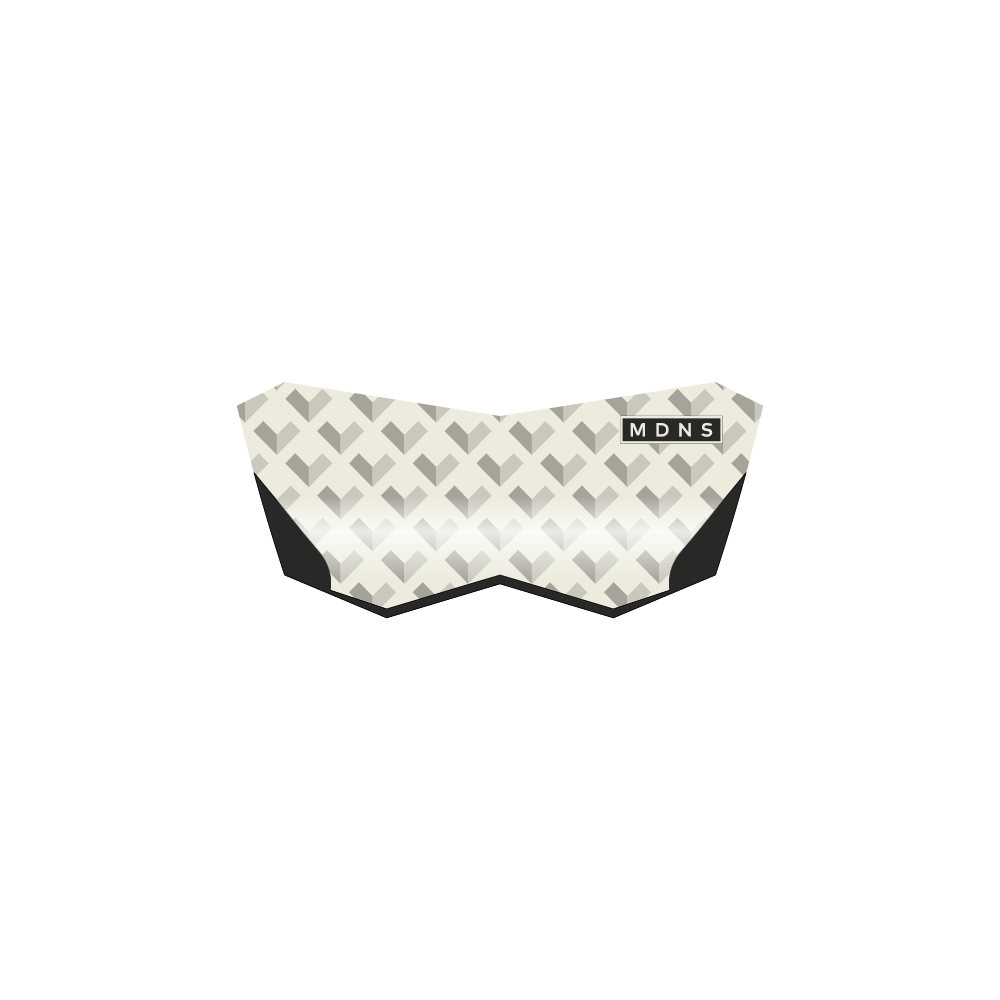
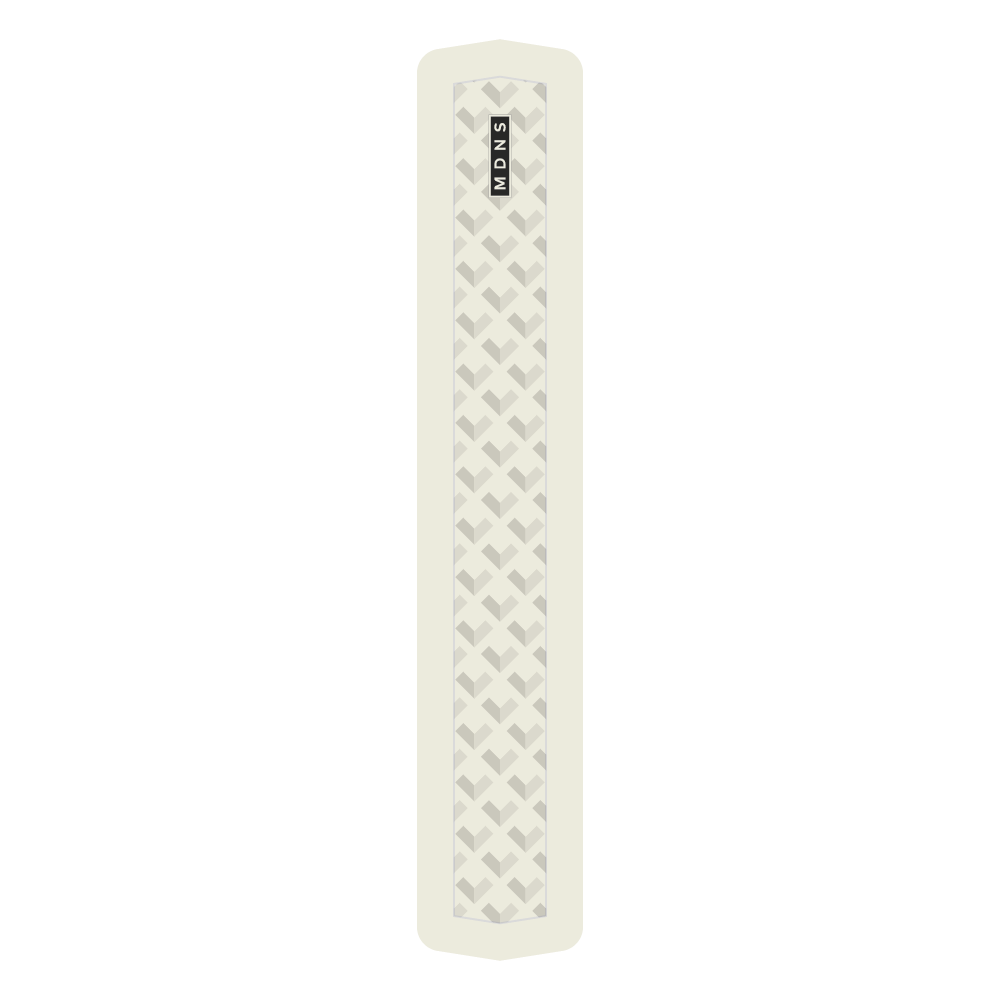
Several MDNS traction pads use a Square Pattern texture, with raised sections designed to improve foot grip on the board's deck.
The grip helps with surf control, while surf fins influence hold in the water, directional stability and maneuverability. These two pieces of equipment serve complementary functions.
The different MDNS surf pads
Single, Double and Triple Traction
The Single, Double and Triple Traction models let you choose a one-, two- or three-piece grip. The MDNS catalog confirms that these models use 3M Greenbase adhesive and a square pattern texture, with construction varying by model.
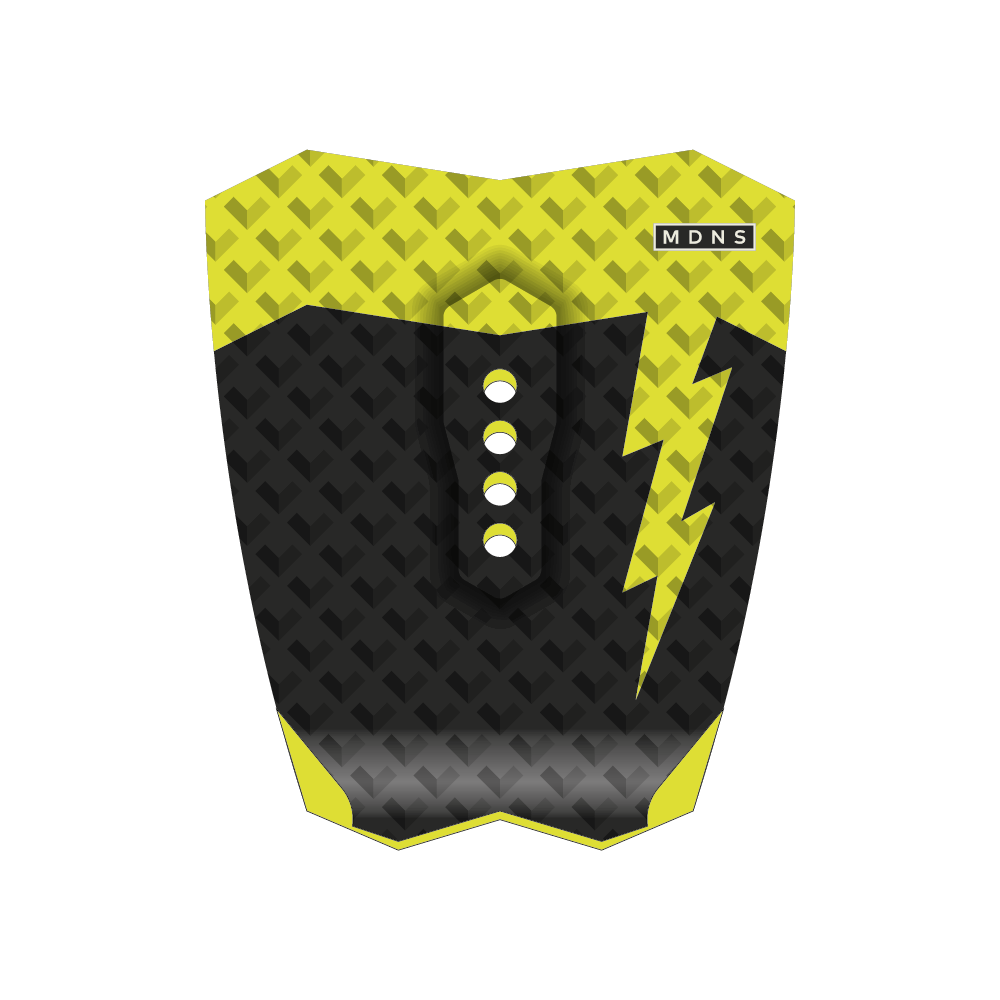
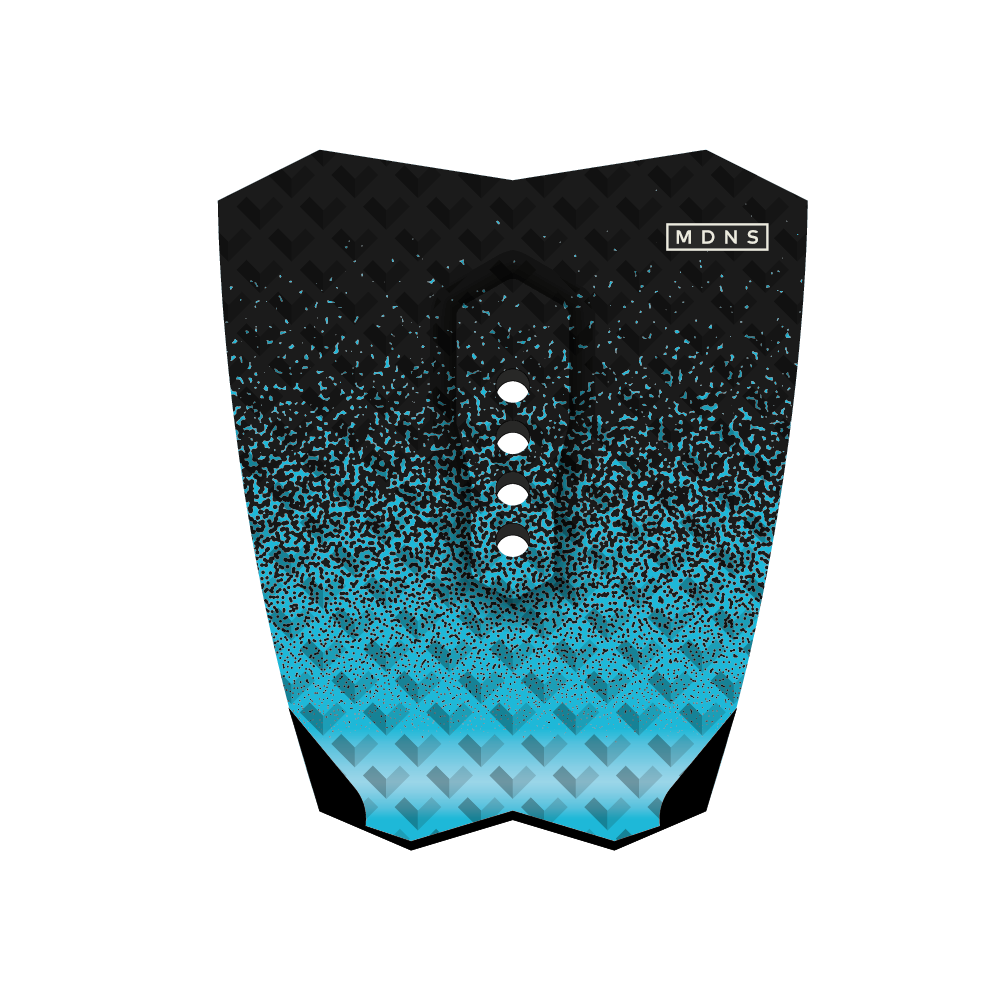
The Single Traction has a center arch and rear kick, while the Double and Triple versions favor a surface split into several pieces to allow you to adjust their placement on the tail.
Junior surf pad: a size suited to smaller boards
The MDNS Junior surf pad is a one-piece model with a square pattern texture, center arch and rear kick. Its more compact size makes it suitable for some smaller boards, provided you check the available space on the tail.
Scut, Stem and Screen Traction
The MDNS range also includes specific models. The Scut Traction is a one-piece pad with a beveled rear kick and square pattern texture. The Stem Traction features an XL center arch, while the Screen Traction has a three-piece construction.
These differences make it possible to choose a surf traction pad to suit your preferred stance and board shape.
Recycled EVA surf traction pads
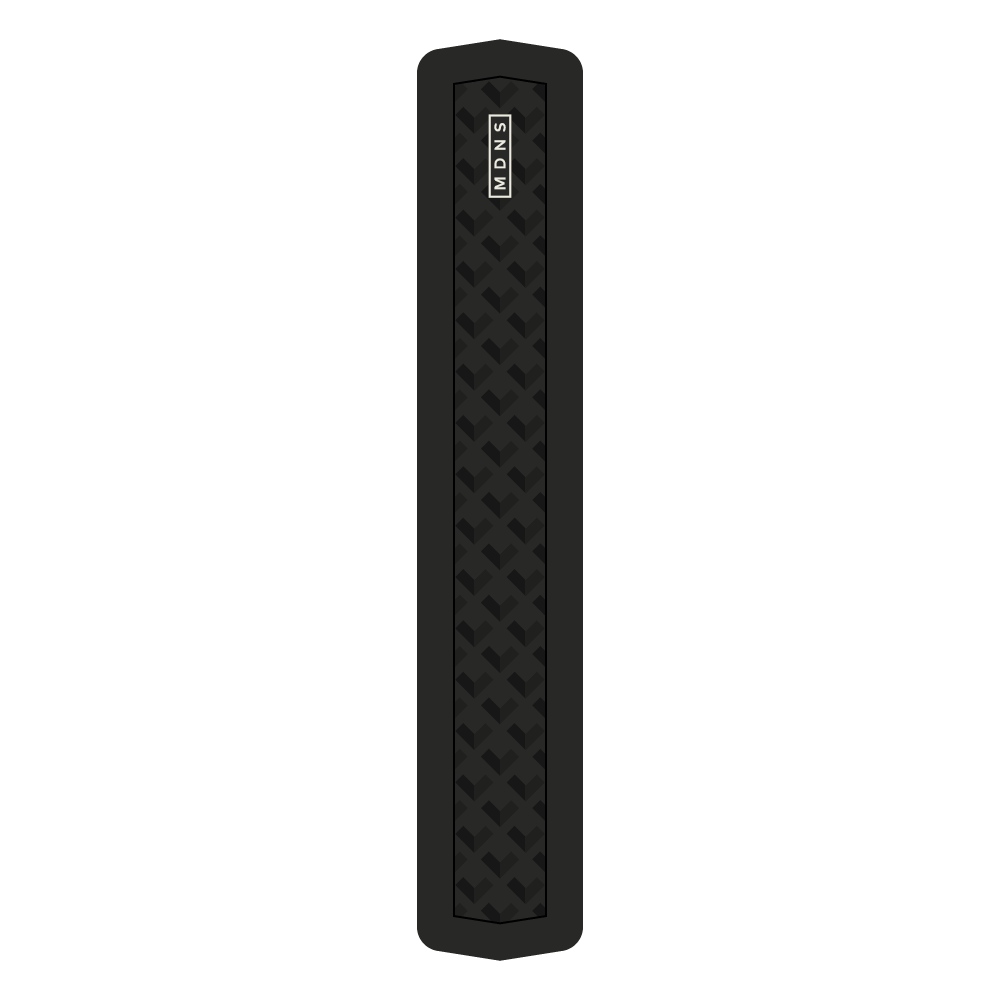
MDNS offers a range of surf pads made from 100% recycled EVA, including its All Black line. This material is used to make the pad's traction surface.
The manufacturer's catalogue confirms that recycled versions are available in different configurations. Check for the word “recycled” on the product page or selected variant to identify the relevant products.
Where should you place a pad on a surfboard?
A tail pad is positioned on the back of the deck, near the tail and above the fin area. Place it where your back foot naturally sits so you can control the board through turns.
Before removing the adhesive backings, dry-fit the pad pieces to check their alignment and spacing. For multi-piece models, adjust the layout to the width of the tail without stretching the pieces.
How do you attach a surf pad correctly?
For a strong bond, carefully prepare the board's surface:
- Remove any wax from the bonding area.
- Clean and dry the surface completely, following the board manufacturer's recommendations.
- Position the pad pieces without removing their protective films.
- Gradually peel off the adhesive backing and apply the pad without trapping air.
- Apply even pressure and follow the manufacturer's recommended curing time before heading out on the water.
Documented MDNS pads use 3M Greenbase adhesive, among other materials. A clean, dry surface that is compatible with the adhesive is essential for a long-lasting bond.
Should you choose a front pad or a tail pad?
The tail pad is placed at the back of the board, mainly under your back foot. A surf front pad sits further forward and can extend the board's traction area, depending on your surfing style and board setup.
The models featured in this collection are primarily designed for rear-foot traction. The MDNS catalogue also lists front pads compatible with certain setups, but availability depends on the products currently on offer.
To equip your board, you can also browse our full range of MDNS surf accessories.
How do you care for your surf grip?
After your sessions, rinse your pad with fresh water to remove salt and sand, then let your board dry in the shade. Regularly check that the edges of the pad remain firmly attached.
To protect your board and accessories while travelling, use a surfboard bag suited to its dimensions. Check out our surfboard transport accessories too, to make getting to the spot easier.
Filters
20 products











FAQ — Pads & Traction
What is a surfboard traction pad for?
A surf pad, or traction pad, improves your grip on the board. Placed mainly on the tail, it helps stabilize your back foot and gives you better control over your stance during turns and maneuvers.
Which surf traction pad should you choose: 1, 2 or 3 pieces?
A one-piece pad provides a continuous grip surface. Two- or three-piece models let you adjust the spacing to match the shape of the tail. Your choice depends on your board’s width and how you like to position your feet.
What’s the difference between a kicktail and a center arch?
The kick tail is a raised section at the back of the pad that helps keep your foot in place during maneuvers. The central arch, or arch bar, creates a guide under the arch of your foot. Some MDNS models combine both features. L's
Where should you place a traction pad on a surfboard?
The tail pad goes at the back of the board, above the fin area. Position it where your back foot sits. Before sticking it down, lay out the pieces dry to check their alignment.
How do you stick on a traction pad properly?
Remove the wax, clean and dry the surface, then position the pieces before removing their adhesive backing. Apply them gradually, pressing down evenly. Allow the recommended curing time before surfing.
Are MDNS surf traction pads made from recycled EVA?
MDNS offers an All Black range made from 100% recycled EVA. This feature may not apply to every model: check the product details and the selected variant.